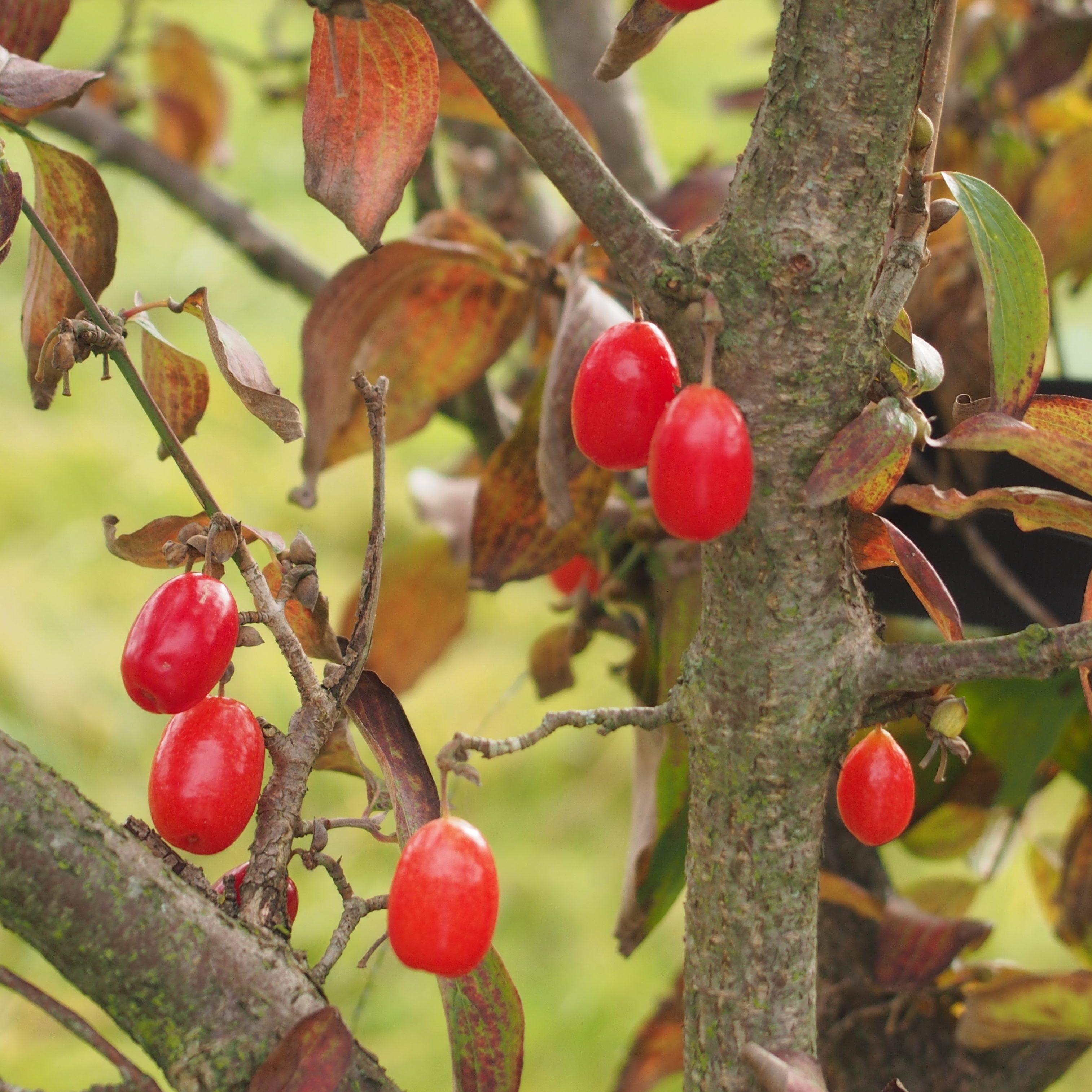
Agnieszka Kwiecien, Nova – CC BY-SA 4.0 – Wikimedia CommonsAgnieszka Kwiecien, Nova – CC BY-SA 4.0 – Wikimedia Commons
General Info – Cornellian Cherry, Cornel, European Cornel
Widely cultivated across Europe and temperate West Asia, the Cornelian Cherry, or Cornel, produces striking, glossy red fruits about the size of Cherries, also resembling those of the Red Mombin, Kaffir Plum, or Cherry Tomato. Rich in Vitamin C and highly aromatic, their flavour can vary greatly depending on the cultivar and stage of ripeness. Some varieties, such as Red Star, are notably sweet, while seedlings often yield tart fruits that become sweeter as they ripen fully. Their flavour profile has been compared to Cranberry, Plum and Sour Cherry. Unripe (and partially unripe) fruits are astringent and not edible raw. The fruits are most commonly used in preserves like syrups, jams, and jellies, which can be paired with meats or incorporated into baked goods. In Romania and Moldova, Cornel are used to make Cornata, an alcoholic beverage. Cornels are often part of the understory in woodlands, making them tolerant of partial shade. However, they prefer full sun or light, dappled shade typically found at woodland edges. They thrive in well-draining, moist, loamy soils but can also tolerate slightly drier conditions. Cornels are reasonably hardy and can withstand moderate drought and wind exposure. While they grow slowly, they are long-lived and low-maintenance once established. They are hardy and adaptable, though they may produce suckers that should be removed. Cornels are unique for being among the earliest deciduous plants to flower, blooming in late winter and providing a welcome burst of colour with a profusion of delicate yellow flowers. Due to their early ornamental display and adaptability to shaping, they make excellent specimen plants, offering particular seasonal interest in late winter. The oval, dark green foliage undergoes a stunning transformation in autumn, displaying attractive shades of yellow and orange. Cornels can be used as hedges or screens, and if allowed to grow freely, they develop a dense, rounded crown, reaching up to 7 metres tall with a width of up to 5 metres.
Please reach out to us (Contact & Socials) if you come across any broken links, incorrect details, or if you represent an online nursery that sells the products mentioned above.


 Hortiforum