Gaurav_Dhwaj_Khadka – CC BY-SA 4.0 – Wikimedia CommonsVengolis – CC BY-SA 3.0 – Wikimedia Commons
General Info – Coffee
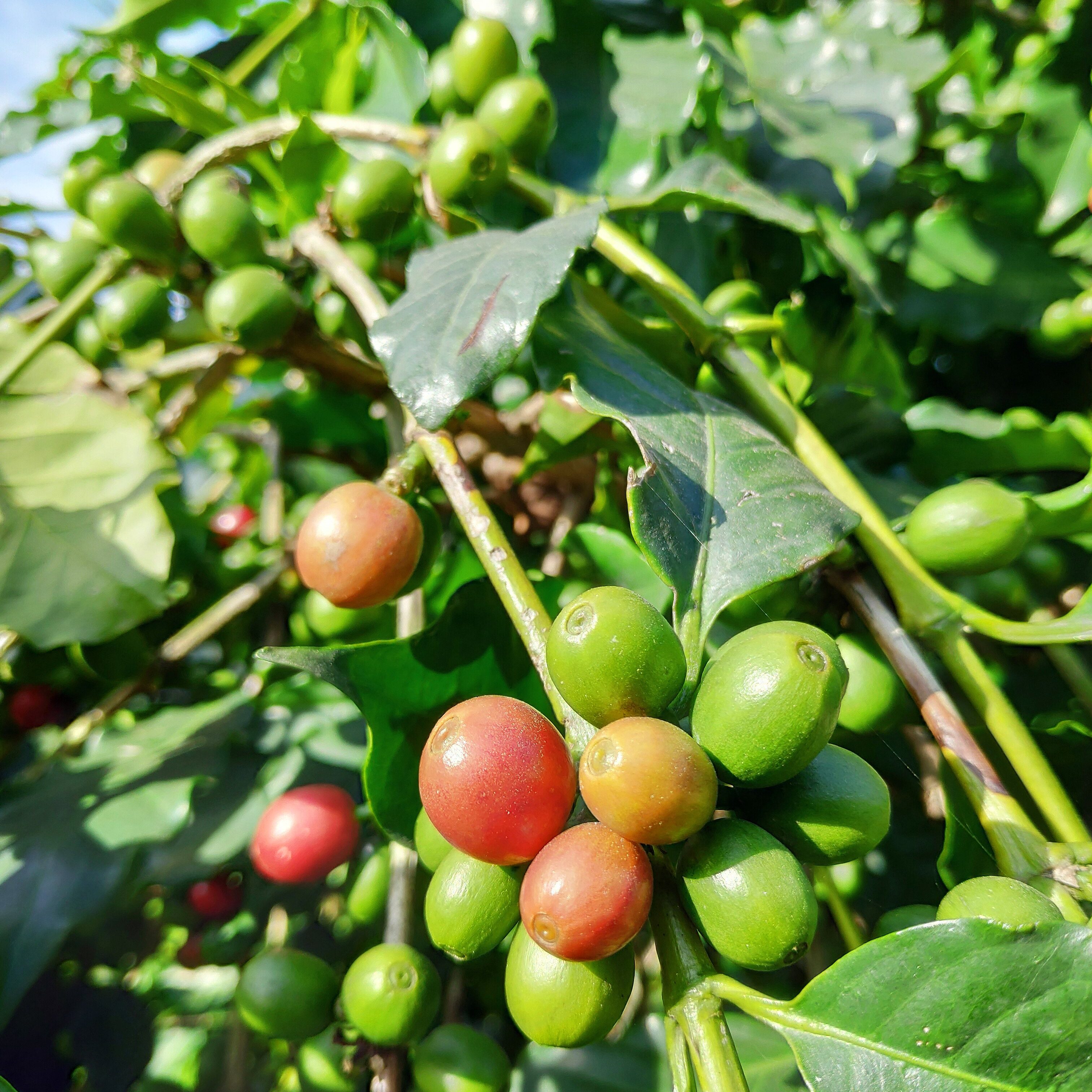
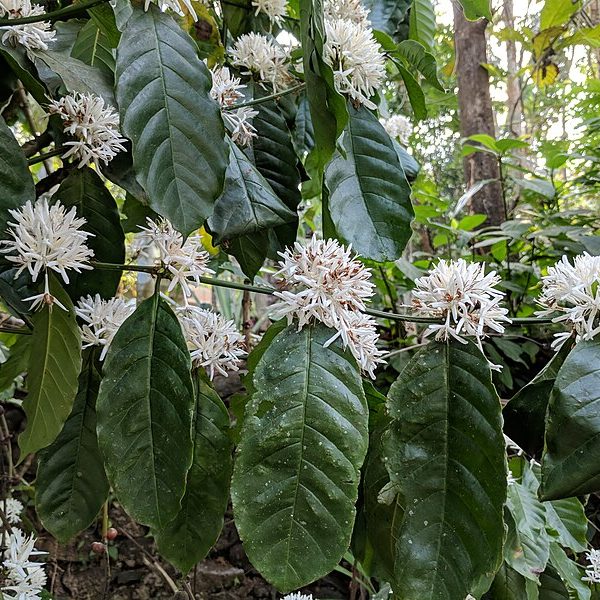
With its adaptability to differing climates, conditions for cultivation and suitability for containers, cultivating and producing your own coffee is more attainable than many might imagine. Coffee plants form a highly ornamental shrub, worthy of cultivation itself for these reasons. A colourful evergreen, foliage is appealing with attractive, dark green, shiny leaves arranged oppositely along branches. Coffee Trees are compact and have a straight form and appealing, cylindrical shape that makes them suitable for hedging. During flowering, Coffee Trees become showpieces, adorned with fragrant white blossoms reminiscent of Jasmine or Gardenias. Within the vibrant, red berries lies the prized coffee bean for which it has been so widely cultivated. The red skin of the coffee berries is pleasantly sweet but somewhat insipid. Once extracted, beans are washed and fermented to removed any flesh or mucilage from seeds, which are then roasted. While the resulting coffee beans may not be of the same quality as those in well-known regions for favourable cultivation, the uniqueness of a home-grown coffee brew can be well-worth the effort. Additionally, dwarf varieties such as Catui, staying under 2m tall, offer a perfect solution for compact spaces or container cultivation. Coffee plants thrive in frost-free climates from the high-elevation tropics to subtropics and even warm temperate gardens as far south as Melbourne when shielded from occasional, light frosts. Plants are best suited to subtropical conditions, where the majority of coffee is cultivated. To foster optimal growth, provide a fertile, moist, free-draining soil in a location sheltered from strong winds and harsh afternoon sun. Coffee plants demonstrate significant shade tolerance and flourish in understory settings. The red berries are borne in abundance, becoming quite eye-catching for birds once mature and additionally readily germinate, leading to plants being recognised as a potential weed in Australia. To protect native environments, consider netting fruiting trees or not cultivating plants if this is non-viable. Coffee trees not only present the opportunity to produce your own brew but also contribute to an attractive, fragrant ornamental presence well-suited for shaded locations.
All Varieties are Seedling grown unless noted. Please reach out to us (Contact & Socials) if you come across any broken links, incorrect details, or if you represent an online nursery that sells the products mentioned above.

 Hortiforum