General Info – Cocoplum, Paradise Plum, Abajeru, Icaco
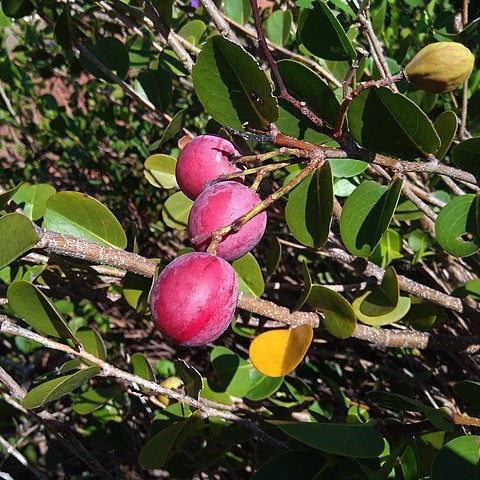
The Cocoplum is a versatile plant that serves as an ideal choice for coastal environments, offering ornamental beauty, hardiness, and edible fruits. Native to the coastal environments of the tropics of the Americas, Cocoplums adapt effortlessly to challenging maritime conditions, thriving in sandy soils and withstanding wind and salt exposure. Plants are highly resilient to drought once mature and can flourish in a wide range of acidic to alkaline soils, in addition to differing soil types. These tolerances and preferences make the Cocoplum perfectly suited as a hedging option in coastal gardens, excellent for forming a windbreak in exposed locations to create a more protected environment for other more sensitive plants. Other hedging options for coastal environments include Sea Grape and Pigeon Plum. Beyond its ability to endure harsh conditions, the Cocoplum boasts ornamental appeal with its attractive foliage and form. The dense, glossy, circular green foliage offers a lush and vibrant appeal, accentuated by the striking beauty of red-orange new growth that contrasts elegantly with the green foliage. Clusters of petite, white flowers make intermittent appearances throughout the year, reaching their peak bloom during the spring season. Cocoplum can be cultivated as either a shrub or a small, bushy tree, with its height ranging from 1 to 6 metres, depending on pruning. Like their foliage and appearance, the fruits of the Cocoplum are likewise ornamental and colourful. The plum-like fruits are borne in abundance, being variable in colour, ranging from white to red, pink, and purple, with the scope of colour adding an aesthetic charm. The fruits, featuring soft, pasty white flesh with a subtly sweet and creamy taste reminiscent of Coconuts, are perfect for snacking. Cocoplum fruits are not only delightful for fresh consumption but can also be made into products such as jams and jellies. Additionally, the seeds, found within the shell, are edible, providing a raw or roasted treat with a flavour akin to Walnuts. Keep in mind that as the Cocoplum is still a largely uncultivated species (in terms of flavour), taste and quality may differ among trees. Some suggest that the red and purple-fruited varieties of this plant may exhibit a superior flavour compared to the white-fruited varieties. In conclusion, the Cocoplum stands out as an excellent ornamental option for those facing the challenges of coastal conditions, with its hardiness, adaptability, and tasty fruits making it a valuable addition to any coastal garden.
Please reach out to us (Contact & Socials) if you come across any broken links, incorrect details, or if you represent an online nursery that sells the products mentioned above.


 Hortiforum