Paulo Etxeberria – CC BY-SA 3.0 – Wikimedia CommonsGrzegorz Gigol – CC BY-SA 3.0 – Wikimedia Commons
General Info – Chestnut, Sweet Chestnut, Spanish Chestnut
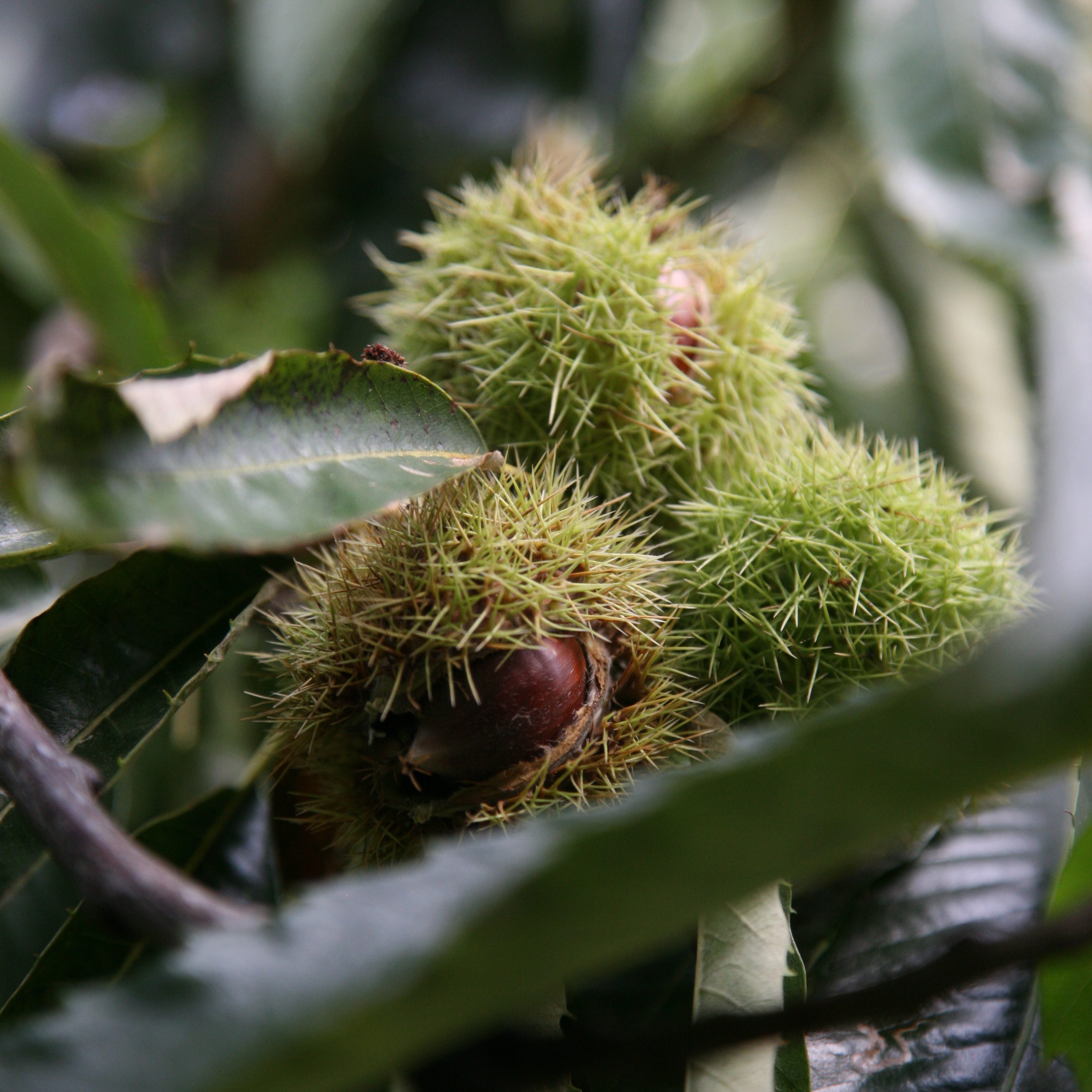
Chestnut trees, known for their longevity and large size, are deciduous and prolific bearers of edible nuts in the Autumn, an excellent choice for gardeners seeking a reliable nut crop. Fruit Chestnuts are edible raw but have a noticeable, unpleasant astringency that is removed through cooking, particularly dry roasting. Once cooked, the white, starchy flesh of the Chestnut develops a sweet flavour, often likened to sweet potato. Chestnuts are a versatile culinary ingredient with many different uses. Traditionally and iconically, chestnuts are simply roasted and served either plain or seasoned with salt. They can also be boiled whole. Chestnuts can be glazed with sugar, coated with chocolate, cooked into a sweet paste with Vanilla known as crème de marrons, or used in a range of baked goods and confections. Due to their starchy and carbohydrate-rich nature, they are also ground into flour, which can be used to make breads and puddings. Cultivation Chestnuts are a traditional nut in temperate Europe, found throughout the forests of the British Isles, France, the Low Countries, much of Southern Europe, and the black sea parts of Asia Minor. Often found growing wild, where their nuts are often harvested, Chestnuts are also commonly cultivated in Eurasia, with numerous high-chill cultivars developed for temperate climates. While Chestnuts are still predominantly cultivated for both commercial and personal using these high-chill cultivars, recent breeding developments have also produced low-chill chestnut varieties suitable for subtropical climates. Pollination is dependent on the variety, with certain such as the Marone & April Gold requiring cross pollination, while Reilly and Winchester are partially self-pollinating but will benefit from cross pollination. Chestnut trees are relatively undemanding, tolerating dry and acidic soils, becoming particularly drought-tolerant once mature and being suitable for gardeners in semi-arid climates with irrigation. Trees will thrive in well-draining but moist loam soils and are particularly averse to alkaline soils. Appearance Chestnut trees are large and vigorous, developing a stately, rounded form when mature and reaching heights of up to 30 metres. Their dense foliage makes them excellent shade trees in summer, and they become ornamental in autumn with their golden, yellow, and red deciduous leaves. Chestnut trees produce both male and female catkins on the same long inflorescences. Chestnuts are excellent producers of soft, buttery nuts, perfectly suited to temperate climates.
All Varieties are Grafted unless noted. Please reach out to us (Contact & Socials) if you come across any broken links, incorrect details, or if you represent an online nursery that sells the products mentioned above.


 Hortiforum