General Info – Cedar Bay Cherry, Beach Cherry, Australian Beach
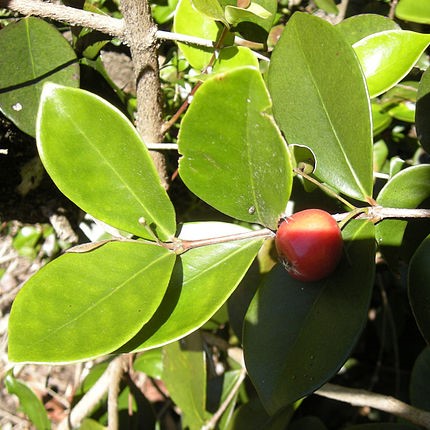
The Cedar Bay Cherry is an ornamental and delectable Eugenia native to the Cedar Bay Region in North Queensland, is an excellent choice for those seeking a visually appealing, edible native that thrives in tropical conditions. The Cedar Bay Cherry is very slow growing, especially when young, eventually growing to a small shrub, making it an ideal candidate for container cultivation. Plants typically reach heights ranging from 2 to 3 metres, making them highly manageable in size. Its manageable size allows for easy pruning to achieve desired shape and size while still yielding a bountiful harvest. The Cedar Bay Cherry plants are well-suited for hedging, boasting shiny, elliptical foliage that adds an ornamental touch, especially with the eye-catching pink/coppery new growth. Exhibiting characteristics typical of the Eugenia genus and sharing similarities with relatives like Pitangatuba, Pitanguinha and Pitomba, these plants feature decorative white flowers adorned with a profusion of white stamens. Native to Coastal Queensland from the Tropical Cape York south to Subtropical Bundaberg, the Cedar Bay Cherry thrives in both subtropical and tropical climates. While Cedar Bay Cherry is adaptable to both full sun and partial shade, in regions with hot, scorching summers it thrives best when provided partial shade. While the Cedar Bay Cherry demonstrates resilience to temperatures as low as -1 degrees Celsius, although it is advisable to shield the trees from frost to prevent harm to their slow-growing foliage. In favourable conditions, these trees can bear fruit within two years and will do so at a small size. Due to its slow growth rate, however, the time required for fruiting may be noticeably longer. Natively Cedar Bay Cherry grows along beaches, in the understory of beach forests or in seasonally dry forests. Plants tolerate seasonal dry periods but prefers consistently moist soils, similarly they prefer rich, fertile soils but can grow in a range of soil types such as rocky or sandy soils. In its native habitat, the Cedar Bay Cherry thrives along beaches, in the understory of beach forests, or within seasonally dry forests. While these plants can withstand seasonal dry periods, they tend to flourish in consistently moist soils. Additionally, they prefer rich, fertile soils but exhibit adaptability to various soil types, such as rocky or sandy soils. The ovular, vivid red fruits of the Cedar Bay Cherry share a resemblance to traditional Sweet Cherries, boasting a pleasantly sweet and juicy flavor that often surprises cultivators with its delightful and inoffensive taste likened to Sweet Cherry. While commonly enjoyed fresh as a delectable native bush tucker, these anti-oxidant rich berries can also be utilised in preserves, juices, and jams. In their native climates, Cedar Bay Cherry trees produce fruits year-round, attracting native birds like Figbirds and Bowerbirds that have a fondness for them. This quality makes these trees an excellent choice for gardens designed to be wildlife-friendly, benefiting local ecosystems, however, where gardeners wish to keep their crop, netting is advisable. One of the most enjoyable and sweet Australian bushfoods, the Cedar Bay Cherry is perfect as a bush tucker snack and with its ornamental appeal and suitability for small, partially shaded spaces, is able to thrive beautifully in nearly all tropical gardens of all sizes.
Please reach out to us (Contact & Socials) if you come across any broken links, incorrect details, or if you represent an online nursery that sells the products mentioned above.

 Hortiforum