D Gordon E. Robertson – CC BY-SA 3.0 – Wikimedia CommonsKrzysztof Ziarnek – CC BY-SA 4.0 – Wikimedia Commons
General Info – Bunya Nut, Bunya-Bunya
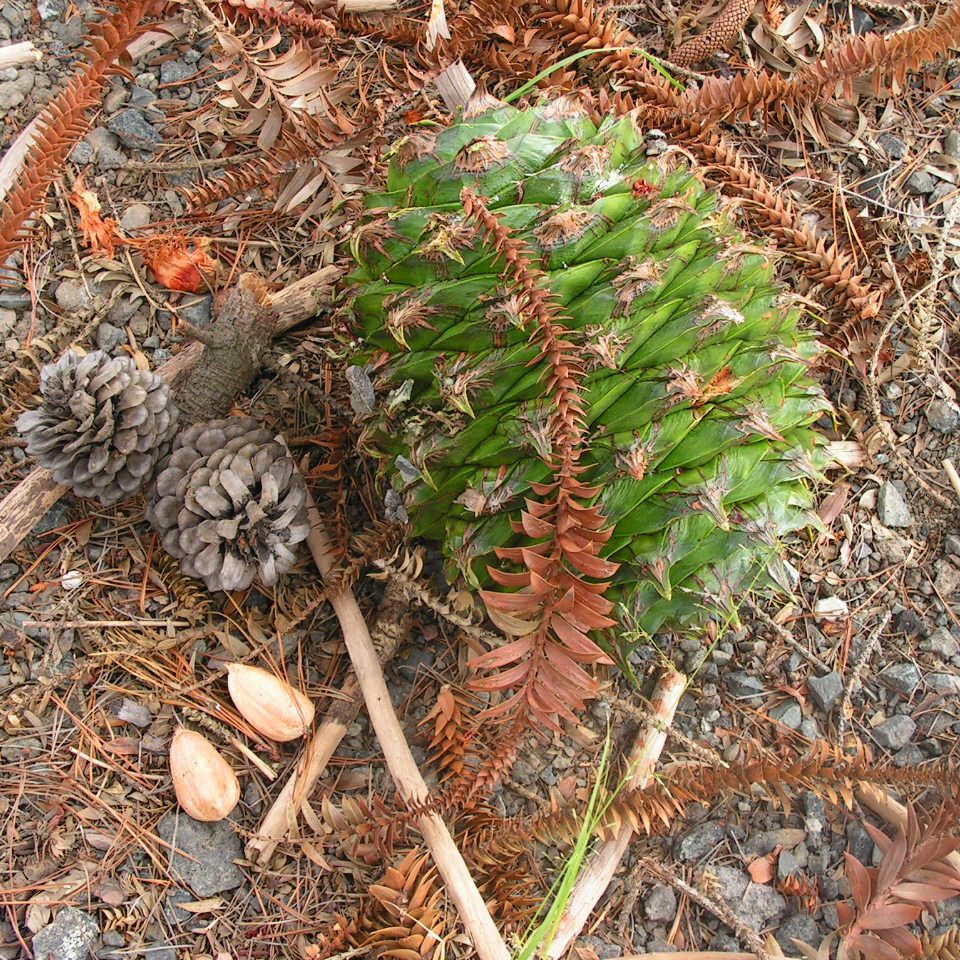
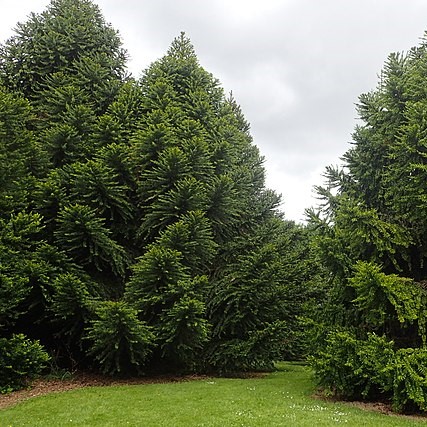
Native to Southeast Queensland and widely cultivated across Australia for their majestic stature and hardiness, the Bunya Pine holds significant historical importance in Australia as a food source for Aboriginal Australians. Bunya Pines have exceptional tolerance to both wind and salt, making them a common choice for planting along Australia’s beachfronts. These hardy plants also showcase remarkable climatic adaptability and drought resistance, thriving in both medium and high rainfall conditions. These towering coniferous trees bear enormous cones, some weighing up to 18kg, filled with edible nuts. Due to the large size of their cones, Bunya trees should not be planted in areas where falling nuts could cause injury or damage, similar to the precautions taken when choosing a location for Coconuts. The flavour of these nuts is often likened to a combination of Potatoes and Chestnuts. Whether enjoyed on their own after roasting or ground into a flour or paste for baking, these nuts offer a versatile culinary experience. Bunya Nuts tend to produce large crops irregularly every three years, with smaller crops in the intervening years. The pyramidal shape and glossy dark green pine needles make the Bunya Nut tree a highly attractive specimen. With strategic placement and thoughtful consideration for their surroundings, the Bunya Nut can provide not only a splendid ornamental display but also an abundant supply of edible nuts.
Please reach out to us (Contact & Socials) if you come across any broken links, incorrect details, or if you represent an online nursery that sells the products mentioned above.

 Hortiforum