General Info – Boab, Baobab, Bottle Tree, Australian Baobab, Cream of Tartar Tree, Upside Down Tree
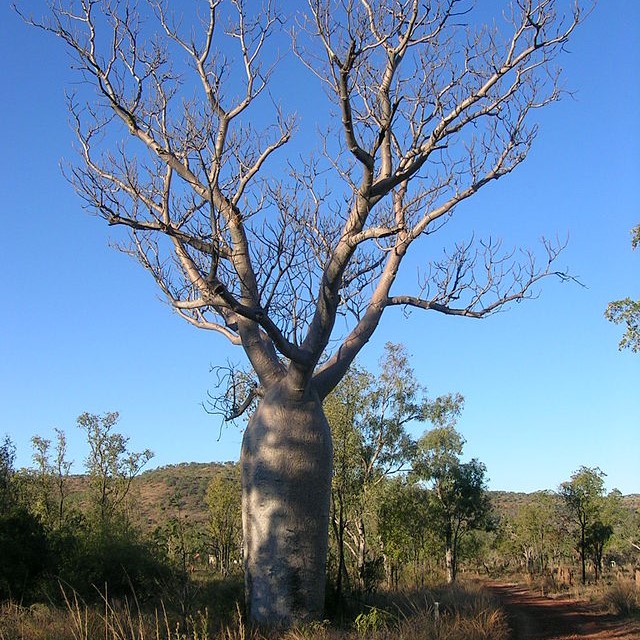
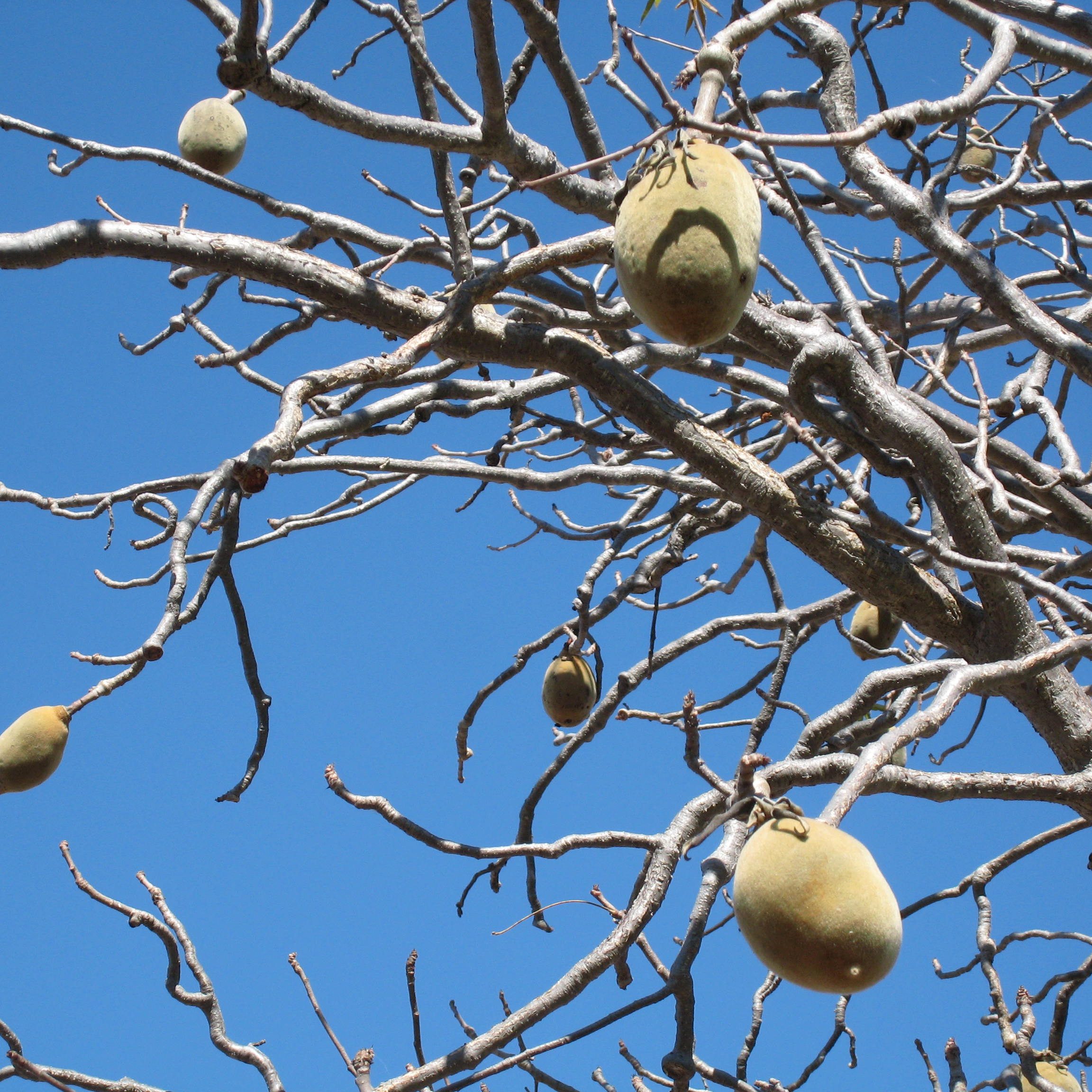
The Boab, commonly known as the Bottle Tree and Upside Down Tree, is famous for its distinctive bulbous trunk that stores water and its unique deciduous appearance during the dry season. Indigenous to the Kimberley region in Western Australia and the Northern Territory, the Boab tree is perfectly adapted to monsoonal climates, storing water in its sizable trunk throughout the dry season. Boab Trees have a compact, irregular crown and shed their leaves entirely during the dry season, giving the bare branches an almost root-like appearance, earning them the name ‘upside-down tree.’ Boabs flower in Summer, coinciding with the rainy season, displaying large, fragrant white flowers. Boabs can reach impressive heights of up to 15m, and more notably, the circumference of their gigantic trunks can span up to 20m. Owing to their majestic appearance, the Boab makes for a superb specimen tree, able to define a landscape and act as an ornamental centrepoint. Their dominant form makes them well-suited for isolated ornamental positions with unrestricted full sun. Native to the Kimberley’s tropical monsoonal climate with distinct dry and wet seasons, and year-round warm to hot temperatures, Boab trees thrive in savanna, monsoonal, and wet and dry climates. However, they are unsuitable for tropical climates with high year-round rainfall. Boabs can also succeed in cooler climates, especially those with dry winters, provided excellent drainage is ensured. Excellent Drainage is the primary requirement, with poorer quality soils tolerated although not preferred. Boabs have excellent drought tolerance but will benefit from supplemental watering in dry summer climates. Boab fruits are large, with a thick shell containing a delightful, dry, white flesh boasting flavours reminiscent of Yoghurt, Lemon, Tamarind, and cream of tartar. This long lasting, dry flesh, rich in Vitamin C and Magnesium, makes for a nutritious and delicious bush tucker. Whether grown for its visual appeal and striking form or its tolerance to harsh conditions and delectable flesh, the Boab stands out as a native wonder worthy of cultivation.
Please reach out to us (Contact & Socials) if you come across any broken links, incorrect details, or if you represent an online nursery that sells the products mentioned above.

 Hortiforum