Agnieszka Kwiecien, Nova – CC BY-SA 4.0 – Wikimedia CommonsAgnieszka Kwiecien, Nova – CC BY-SA 4.0 – Wikimedia Commons
General Info – Blue Sausage Tree, Dead Man’s Fingers, Blue Bean Shrub
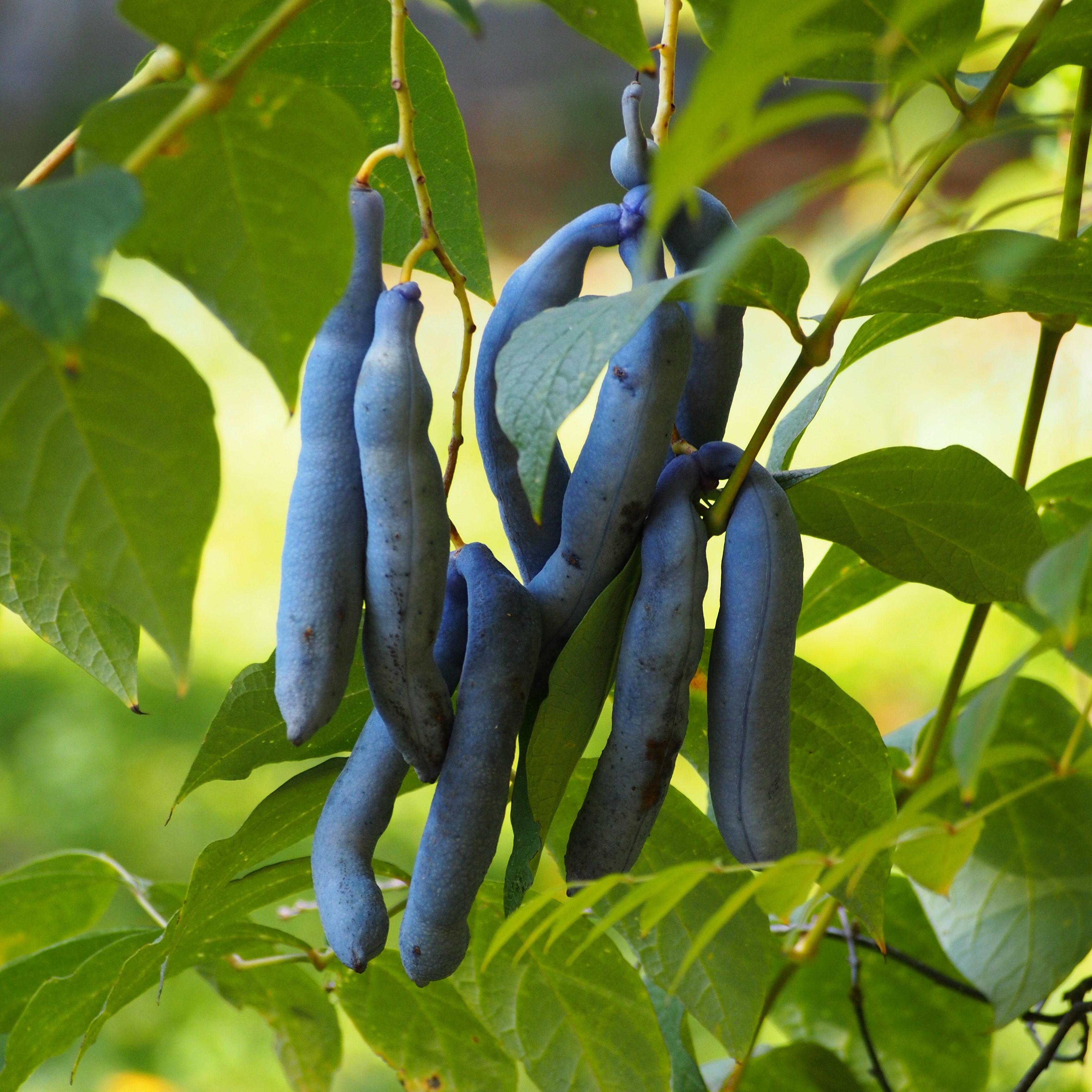
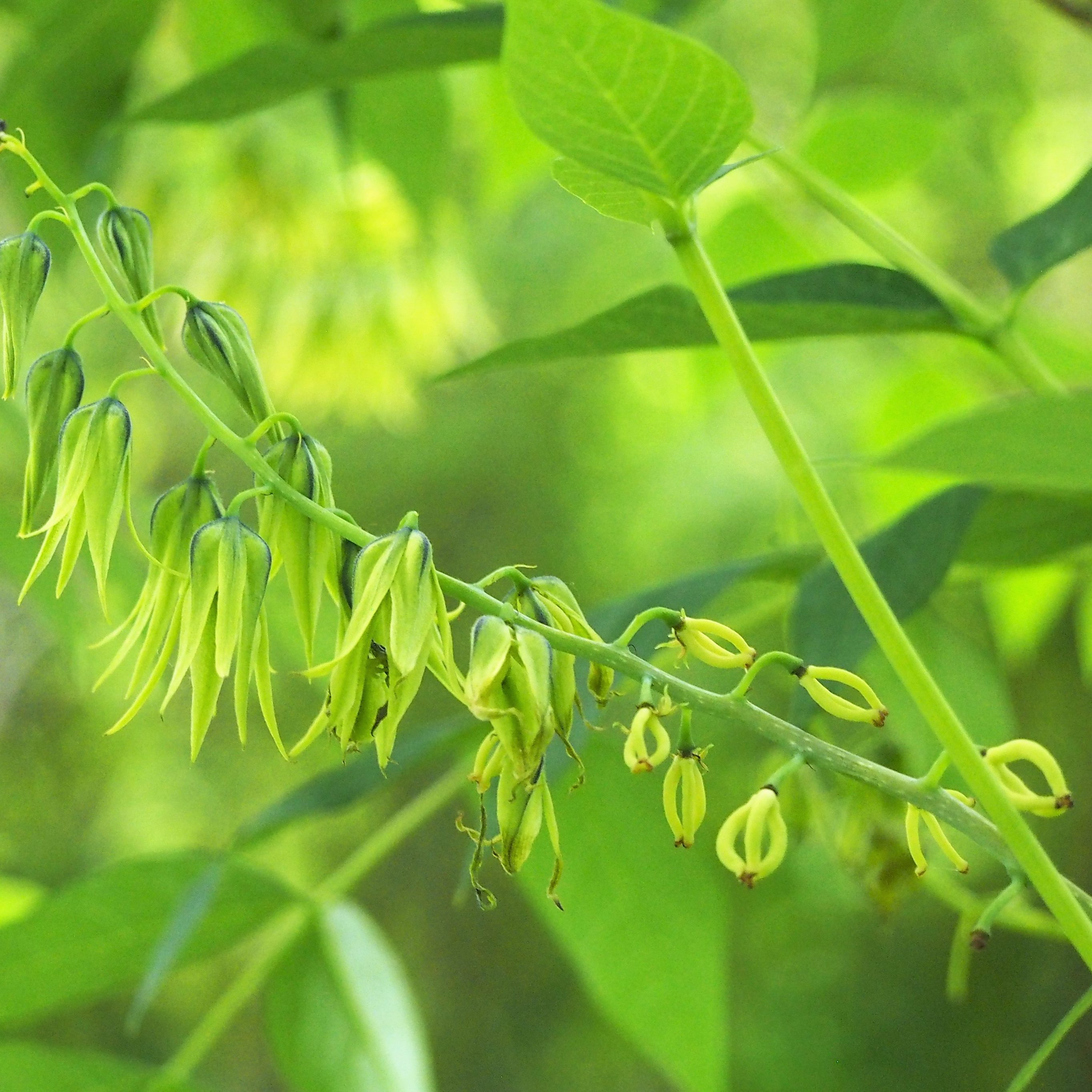
The name Blue Sausage Tree is as unique and striking as its eye-catching fruits. The fruits grow in hanging clusters, closely resembling their name with swollen blue pods that can reach up to 12 cm in length. These sausage-shaped pods range in shades of grey and blue, often with a metallic sheen. Their almost scaly, skin-like peel, combined with their blue colour, has earned them the nickname Dead Man’s Fingers. As they ripen in autumn, the fruits begin to split down the middle, revealing inedible black watermelon-like seeds surrounded by translucent, gelatinous pulp. This pulp is sweet and delicate, sometimes considered insipid but never unpleasant. Its flavour is most commonly compared to Watermelon, but also resembles Cucumber and Mango. Belonging to the Lardizabalaceae family, the Blue Sausage Tree is related to the Chocolate Vine (Akebia Quinata), which bears similar fruits. The Blue Sausage Tree is native to the elevated, temperate regions of Nepal, Tibet, and China, growing at altitudes ranging from 900 to over 3000 metres. It is highly cold-hardy, making it suitable for all but the most alpine climates of mainland Australia. It is an excellent exotic choice for temperate climates, similar to plants like Mandarin Melon Berry, Saskatoon Berry, Goumi, Chilean Guava, or North American Paw Paw. Reflecting its tolerance for cool temperate conditions, the tree can be successfully grown in the Pacific Northwest and the southern parts of the UK. There is conflicting information regarding its tolerance of hot summers, with some suggesting it struggles in heat while others claim that hot summers are necessary for hardening the wood. The safest and most likely conclusion is that the tree will suffer in extreme summer heat unless it is provided with shade and protection from scorching sun and drying winds. It thrives in a sheltered position and should not be exposed to strong winds. Trees should be watered during droughts, and they prefer rich, moist, loamy soils. The plant grows into an upright, multi-stemmed deciduous shrub with large, divided leaves that can reach up to 90 cm in length. It flowers in summer, producing inconspicuous green-yellowish blooms on hanging racemes. The striking fruits typically ripen around the time of autumn leaf fall, creating a stark and noticeable contrast.
Please reach out to us (Contact & Socials) if you come across any broken links, incorrect details, or if you represent an online nursery that sells the products mentioned above.

 Hortiforum