Yonathan Galler – Public Domain – Wikimedia CommonsTatiana Gerus – CC BY 2.0 – Wikimedia Commons
General Info – Black Sapote, Chocolate Pudding Fruit, Black Soapapple
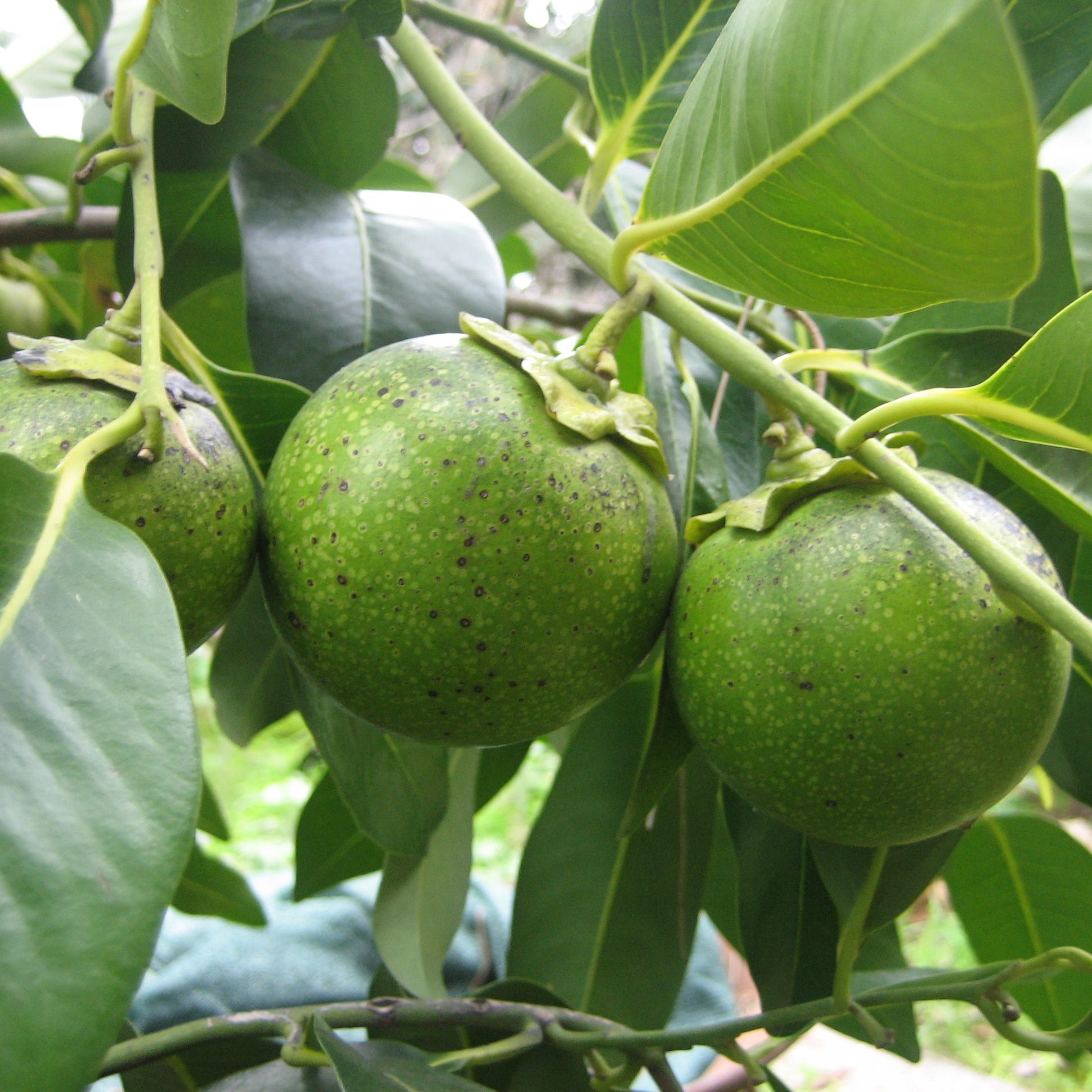
One of the most tempting and unique, tropical fruits available, the Black Sapote is an easily cultivated tree for subtropical and tropical climates. Also known as the Chocolate Pudding Fruit, it earns its name from the pudding-like consistency and chocolate colour of its flesh when ripe, making it an exceptionally unique tropical delight. When properly bletted, the flesh acquires a luscious, rich pudding-like texture. Despite its chocolate appearance, the flavor is mild and sweet, reminiscent of a Persimmon, making it an ideal companion for spices like Cinnamon. The flesh is often used as a mock chocolate, mainly for its color, and can be used in cakes, milkshakes, or pair well with whipped cream for a chocolate-like treat. A member of the Diospyros genus and closely related to the Persimmon, the Black Sapote shares many similarities in terms of foliage and fruit. Black Sapote develop into medium-large trees with dense crowns and boast attractive, large, glossy green leaves, adding to their ornamental appeal. Fruits are similar in appearance to Persimmon, featuring a distinct sepal and an olive-green skin that darkens as the fruits soften and ripen. Black Sapote fruit take on a shriveled, almost spoiled appearance once fully ripe, belying the true ripeness and deliciousness of the fruit. Thriving in full sun positions and rich soils, Black Sapotes also tolerate shallow or calcareous soils, provided they are protected from drought. The Black Sapote is slightly cold tolerant with mature trees tolerating -2 degrees. For those in marginal temperate climates, seedlings are the preferred choice due to their hardiness, even though they require more time to fruit and may have potential variations in fruit quality. The Black Sapote’s dynamic fruits hold exceptional culinary value, making them an excellent alternative for those seeking a chocolate substitute.
All Varieties are Grafted unless noted. Please reach out to us (Contact & Socials) if you come across any broken links, incorrect details, or if you represent an online nursery that sells the products mentioned above.


 Hortiforum