General Info – Red Bayberry, Chinese Bayberry, Japanese Bayberry, Yang Mei, Waxberry
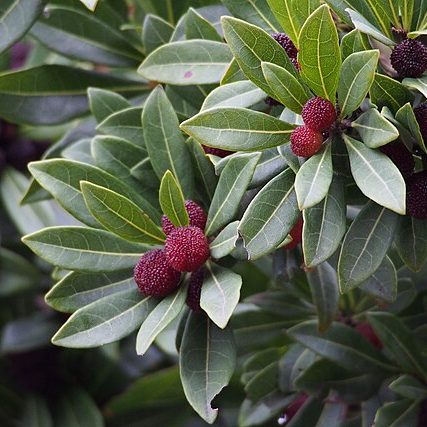
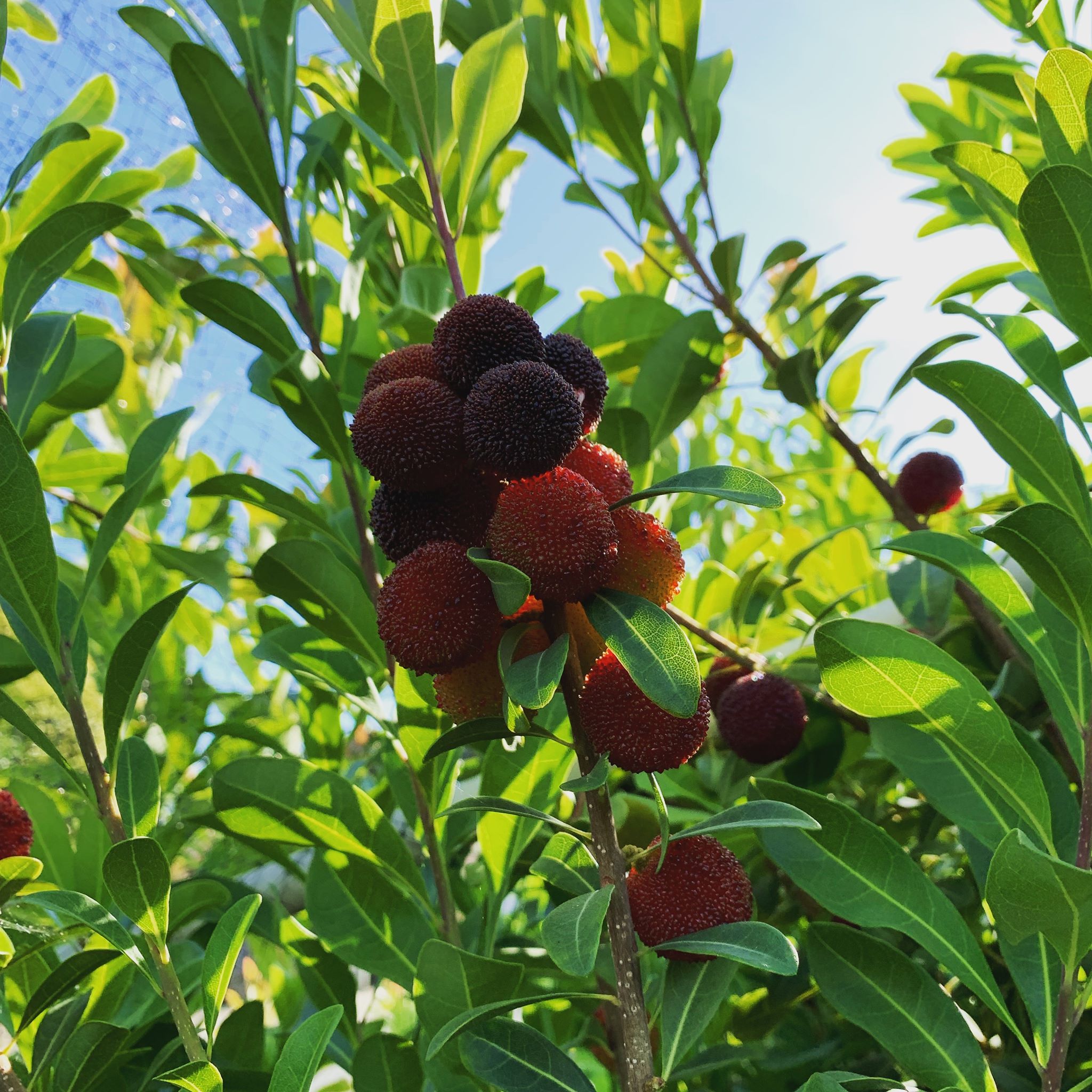
With its attractive appearance, captivating colour, and delightful sub-acid flavour, the Red Bayberry stands as a popular fruit across East Asia and can be cultivated and savoured fresh in Australia as well. Cherished in China for millennia, these fruits maintain their popularity in modern times, with commercial cultivation predominantly concentrated south of the Yangtze River. Red Bayberries, often mistaken for the ornamental yet edible Arbutus Unedo, the Strawberry Tree, exhibit an attractive appearance. Fruits reach up to 25mm in diameter, with distinct knobby skin, coupled with a magnificent deep red hue, bordering on purple when fully ripe, adds to their appeal. A delectable combination of sweet and tart, these berries are succulent and aromatic, with a taste reminiscent of Plum and Strawberry. While enjoyable fresh, their perishable nature post-harvest encourages drying, juicing, canning, or soaking in liquor for preservation, for which they are excellent in. Red Bayberries have unique growing requirements reflective of their native Chinese climate, making them a potentially challenging task. While plants can tolerate a variety of climates (from England to Tokyo), specific conditions are essential for fruitful growth, especially in terms of abundance and high-quality fruit. High humidity, exceeding 80%, is crucial for both fruit set and quality. Best suited to subtropical climates, Coastal Areas from Northern Australia to Central Queensland offer ideal conditions, thanks to the suitable temperature range and, particularly, high humidity. In climates with lower humidity during flowering, fruit set may be diminished or result in lower quality fruit, yet still worthwhile for cultivation. A hardy plant by nature, Red Bayberries tolerate a range of soils, including infertile rocky ones, though the ideal soil type is freely draining, slightly acidic, and very fertile. With a tolerance for temperatures as low as -9 degrees Celsius, these evergreen trees endure cold winters with light snowfall in addition to sweltering summers, adapting to a broad spectrum of non-arid climates. Reaching heights of up to 15m, the Red Bayberry is among the few evergreen, fruiting plants suitable for regions experiencing cold winters, together with Feijoa, Carob, Mandarin and Loquats. Characterised by dark green, leathery, partially serrated leaves, and inconspicuous flowers, these trees are often dioecious, requiring both male and female plants for fruit production, although bisexual specimens exist. While the Red Bayberry may pose a challenge in fruiting, its unique, delicious fruit offers a rewarding opportunity to experience fresh Bayberries, a treat otherwise only available in processed forms.
Please reach out to us (Contact & Socials) if you come across any broken links, incorrect details, or if you represent an online nursery that sells the products mentioned above.

 Hortiforum