

General Info – Banana
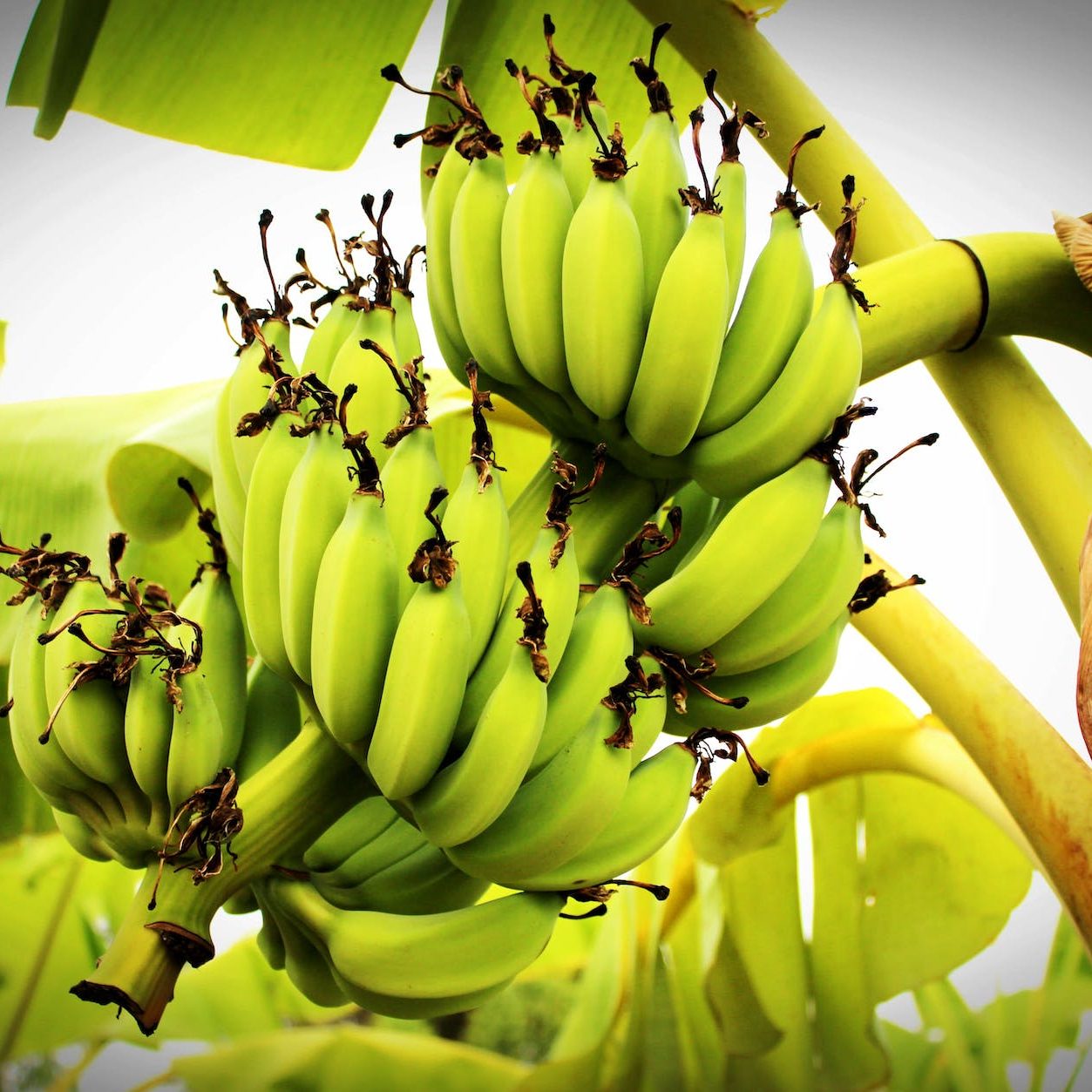
Creamy, delicious, homegrown bananas present a tempting option for gardeners throughout Australia, rewarding them with enticing, ample clusters of fruit. Undoubtedly, one of the most beloved fruits globally, bananas are a popular choice for backyard trees, and for good reason. The sweet, creamy, and delectable bunches are an irresistible sight, suitable for various uses—from a delightful and nutritious snack to drying or baking.
Gluts of bananas can be preserved through methods such as dehydration, freeze-drying, or regular freezing, each preserving their delightful flavour in distinct forms. A diverse range of banana cultivars are available for cultivation in Australia, each boasting its own unique taste, texture, and appearance. The vast majority of these cultivars are not commercially available in stores, despite their superior taste compared to commonly cultivated varieties. Banana trees bear fruit year-round, although the quality and size may diminish in the cooler months, with lower sugar content and flavour. Nevertheless, even during these times, homegrown bananas remain a delightful fresh treat when other options for fresh fruit are scarce.
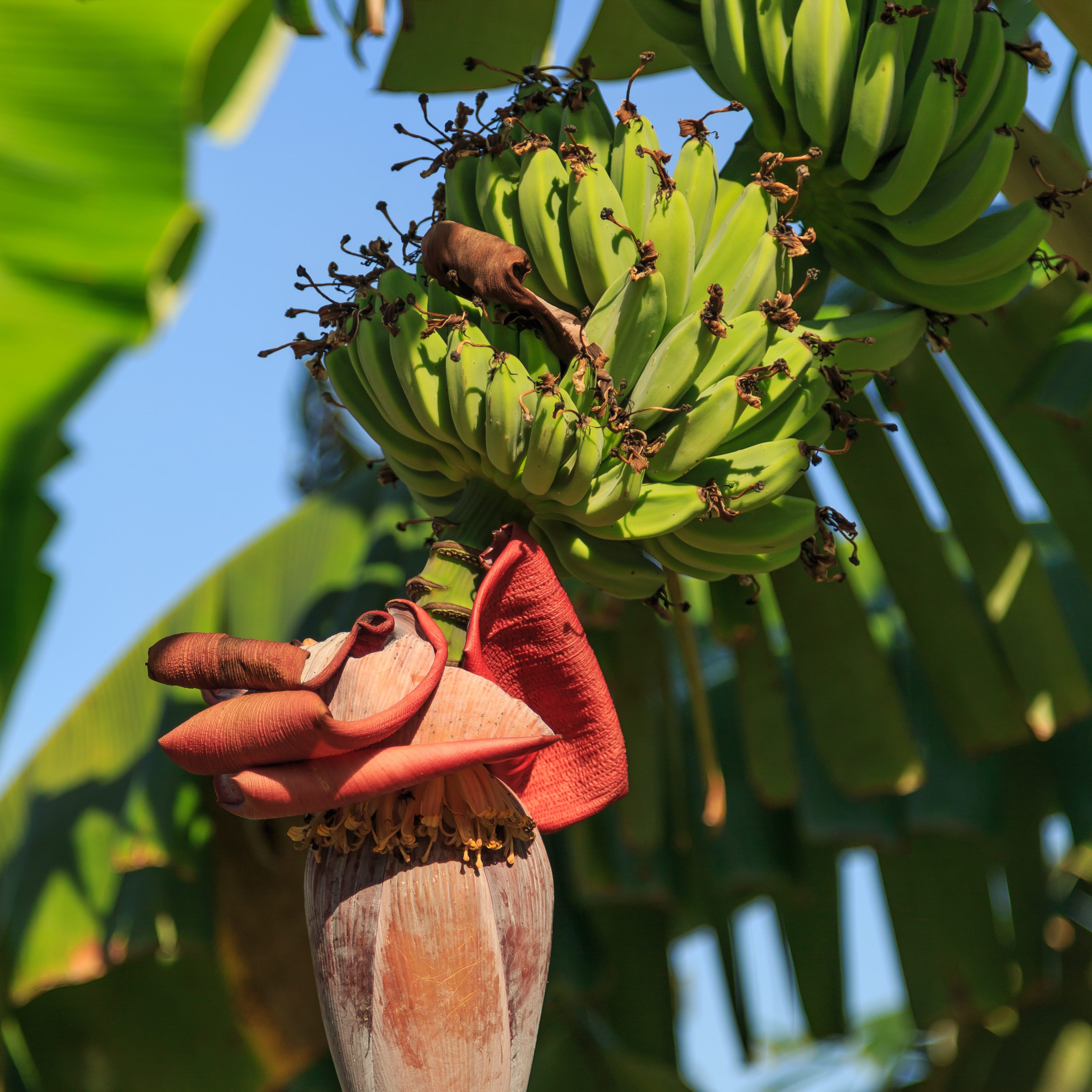
In Asian cuisines, banana flowers are consumed as a vegetable, while for many cultures the broad leaves serve as natural plates or wrappings for steaming food. Botanically considered herbaceous plants, bananas are a distinct tropical sight, with their pseudostem composed of tightly packed layers of leaves. Each stem or plant produces only one cluster of bananas and should be cut down for composting or mulch after harvesting.
The iconic, paddle-shaped leaves of the banana plant are ornamental, and their cold-hardy relatives are often cultivated purely for decorative purposes. Bananas prolifically produce “pups,” which can either be left to become the next cropping stem or easily separated and transplanted into separate plants. Given this, bananas are an excellent choice for home propagation, with the removal of excess pups ensuring nutrients and moisture can be dedicated to flowering stems (refer to the guide, “How to Grow Your Own Bananas,” for management advice).
Plant size varies based on conditions and variety, ranging from 4m tall to 2m tall for dwarf varieties that are easier to harvest, protect, and manage. Although native to the tropics, banana trees can thrive in cooler, mild temperate climates such as Melbourne, tolerating light frosts, though they may appear ragged especially in strong winds. Bananas are notorious heavy feeders and drinkers, flourishing in fertile, loamy soils with regular fertilization and consistent, high rainfall. Tolerance for drier conditions or poor, infertile soils is minimal and will result in stunted growth and poor fruit set.
Meeting drainage and moisture requirements can be challenging, as banana plants prefer consistently moist soils that also drain well. Regular applications of compost and mulch significantly assist with fertility and moisture requirements. When properly nurtured, plants grow densely with broad, healthy leaves that are highly ornamental. Superficial leaf damage caused by strong winds may occur, resulting in a shredded appearance; however, if winds are not excessively strong to topple the plants, this damage is only superficial. For optimal growth and disease/pest resistance, full sun exposure and good airflow are essential. With a little attention and planning, gardeners can enjoy their very own bunches of bananas, along with the edible flowers and versatile leaves.
Note that quarantine restrictions exist within the NSW Banana Protected Area, please consider these requirements when purchasing and moving plants within this area.
Useful Links
Gardening Australia -How to grow your own bananas. Succinct, all-round guide on positioning, fertilisation, watering, harvesting and management.
Plant Profile/Properties
| Latin Name | Musa Acuminata |
| Place of Origin | South Asia, South East Asia |
| Propagation | Tissue Culture, Sucker Growth |
| Deciduous/Evergreen | Evergreen |
| Pollination (info) | Self Pollinating |
| Average Max Height | 4m |
| Average Time to Fruiting | 2-3 Years |
| Harvest Period | Year Round |
| Growth Rate | High |
| Chill Hours (info) | N/A |
| Cultivars/Varieties in Australia | Refer to Table Below |
| Dwarfing Varieties | Refer to Table Below |
| Preferred Climate(s) (info) | Tropical, Subtropical |
| Marginal Climate(s) | Warm Temperate |
| Cold Tolerance when Mature (info) | Low (-3) |
| Rainfall (info) | High |
| Pot Suitability | Yes (Dwarf Varieties) |
| Sun/Shade Tolerance | Full Sun |
| Preferred Soil (info) | Good Drainage |
| Preferred PH (info) | Neutral (6.5-7.5) |
| Drought Tolerance | No |
| Wind Tolerance (info) | Low – Medium |
| Salt Tolerance (info) | No |
| Pests & Diseases | Nematodes |
Where to Purchase – Online Nurseries (Australia Only)
| Nursery | Daleys (NO QLD) | Ross Creek Tropicals (QLD ONLY) |
|---|---|---|
| Category Page | Link | Link |
| Blue Java | Link | Link |
| Cavendish | Link | Link |
| Dwarf – Cavendish | Link | |
| Super Dwarf – Cavendish | Link | |
| DPM 25 | Link | |
| Ducasse | Link | Link |
| Dwarf – Ducasse | Link | Link |
| French Plantain | Link | |
| Goldfinger | Link | Link |
| Grand Naine | Link | |
| Horned Plantain | Link | Link |
| Lady Finger | Link | Link |
| Dwarf – Nathan | Link | |
| Pacific Plantain | Link | Link |
| Pisang Ceylon | Link | Link |
| Red Dacca | Link | Link |
| Dwarf – Red Dacca | Link | Link |
| Tonga | Link | Link |
| Williams | Link |
 Hortiforum