APRICOT

Maurice Flesier – CC BY-SA 4.0 -Wikimedia Commons
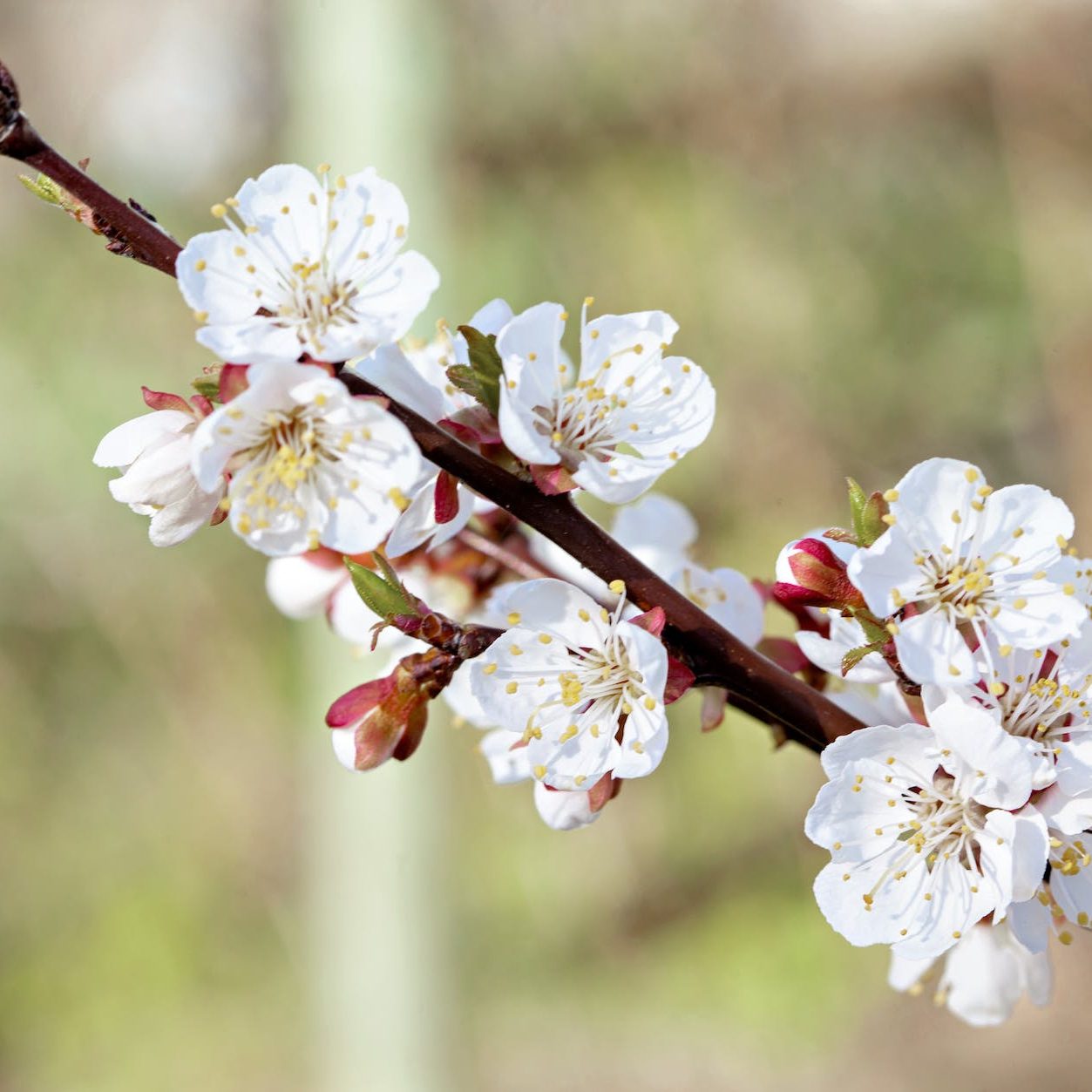
Julia Filirovska – Pexels.com

General Info – Apricot

Apricots are a delicious and versatile summer fruit with a distinct tart/sweet flavour and aroma. Fibre and vitamin rich, Apricots are a healthy treat when eaten fresh, but like their relatives the Plum and Peach, they often ripen altogether, leading to a glut of ripe fruits. These gluts can be turned into a variety of delightful products with long shelf lifes, such as through drying, bottling or making into a superb jam. With a range of varieties available, fruits can vary in appearance, size and flavour, from the sweet, deep-orange of the Fireball to the flavourful, pale-gold of the Glengarry.
Cultivation requirements for Apricots are similar to that of Peaches, with Apricots well-suited to climates with cool winters and hot summers with low humidity but plentiful watering. Apricot trees will thrive in a fertile, loam soil with excellent drainage, drainage and soil quality can be improved through mounding, regular mulch and incorporating compost into the soil. Trees are particularly susceptible to diseases such as canker and brown rot in climates with wet summers and high humidity, susceptibility to disease and plant health can be improved through providing full sun and ensuring good airflow in trees. Pests such as birds and fruit flies are everpresent but harvest can be protected through netting. Apricots on dwarf rootstocks are suitable for growing in containers where conditions and position can be closely controlled. While traditionally a tree of temperate climates, there are a range of varieties suitable for the subtropics such as Sal, Fireball and Glengarry which only require around 400 chill hours.
Apricot trees will reach maximum heights nearing 5-6m on normal rootstocks, while plants on dwarf rootstocks will keep to a more manageable 2m tall. Fruiting buds form on one-year old wood and plants should be pruned to ensure airflow and form. As with other Prunus, Apricot trees produce stunning blossoms in early spring, with trees covered in clusters of white-pink flowers. Challenging but rewarding, fresh, home-grown Apricots are a true treat and can be transformed into a range of delicious products.

Plant Profile/Properties

Latin NamePrunus Armeniaca
Place of OriginCentral Asia
PropagationGrafting
Deciduous/EvergreenDeciduous
Pollination (info)Self Pollinating
Average Max Height5m
Average Time to Fruiting2-3 Years
Harvest PeriodRefer to Below Table
Growth RateHigh
Chill Hours (info)Refer to Below Table
Cultivars/Varieties in AustraliaRefer to Below Table
Dwarfing VarietiesYes, Rootstock Dependent
Preferred Climate(s) (info)Refer to Below Table
Marginal Climate(s)N/A
Cold Tolerance when Mature (info)High (-30)
Rainfall (info)Medium
Pot SuitabilityYes (Dwarf Varieties)
Sun/Shade ToleranceFull Sun
Preferred Soil (info)Good-Perfect Drainage
Preferred PH (info)Neutral to Slightly Alkaline (6.5-8.5)
Drought ToleranceMedium
Wind Tolerance (info)Medium
Salt Tolerance (info)No
Pests & DiseasesMedlfy, Leaf Curl, Birds

Available Varieties

CultivarsHarvest PeriodChill HoursPreferred Climate
GlengarryOctober, November400Subtropical, Warm Temperate
SalNovember, December400Subtropical, Warm Temperate
BentleyNovember, December500Subtropical, Warm Temperate
TiltonNovember, December500Warm Temperate, Cool Temperate
DivinityDecember600+Warm Temperate, Cool Temperate
GoldrichDecember600+Warm Temperate, Cool Temperate
CastlebriteDecember, January500Warm Temperate, Cool Temperate
StoreysDecember, January600+Warm Temperate, Cool Temperate
TrevattDecember, January600+Warm Temperate, Cool Temperate
MoorparkJanuary, February600+Warm Temperate, Cool Temperate
RivalJanuary, February600+Warm Temperate, Cool Temperate
FireballJanuary, February500Warm Temperate, Cool Temperate
BulidaJanuary, February500Warm Temperate, Cool Temperate

Where to Purchase – Online Nurseries (Australia Only)

NurseryDaleysHeritage Fruit TreesGarden ExpressWoodbridge Fruit TreesRoss Creek TropicalsLadybird Fruit Tree Nursery
Category PageLinkLink & Link (Dwarf)Link (All Stone Fruit)Link (Apricots & Medlars)Link (All Stone Fruit)Link
Seedling – Low ChillLink (S)
BentleyLinkLink
BulidaLinkLink
Bulida – DwarfLinkYesLink
CastlebriteYes
DivinityLinkYesLinkLink
Divinity – DwarfLinkYes
Fireball – DwarfLinkYesLinkLink
GlengarryLinkLinkLink
GoldrichYesLink
HunterLinkYesLink
MoorparkLinkYesLinkLinkLink
Dwarf – MoorparkLinkYesLinkLink
NewcastleYes
PattersonYes
RivalYesLink
SalLinkLink
StoreysLinkLink
Storeys – DwarfYes
Tardi de BourdonelYes
TiltonYes
Tilton – DwarfYes
TrevattLinkYesLinkLinkLinkLink
Trevatt – DwarfLinkYesLink
All Varieties are Grafted unless noted. (BR) = Bare Root. (S) = Seedling. Please reach out to us (Contact & Socials) if you come across any broken links, incorrect details, or if you represent an online nursery that sells the products mentioned above.