
General Info – Apple
Refer to the following page for links to nurseries that sell Apple trees – Nurseries selling Apples
One of the world’s oldest cultivated fruiting trees and still one of the most popular due to their unparelleled variety and culinary versatility. Malus domestica refers specifically to the domesticated forms of Apples, with the main wild ancestor Malus Sieversii native to the Altai Mountains of Central Asia and believed to have been domesticated up to 10,000 years ago. This historic and widespread cultivation has resulted in the development of innumerable, regional apple cultivars suited to a range of climates from cold temperate to subtropical and bred for a range of purposes from fresh eating to cider and cooking.
Fruit
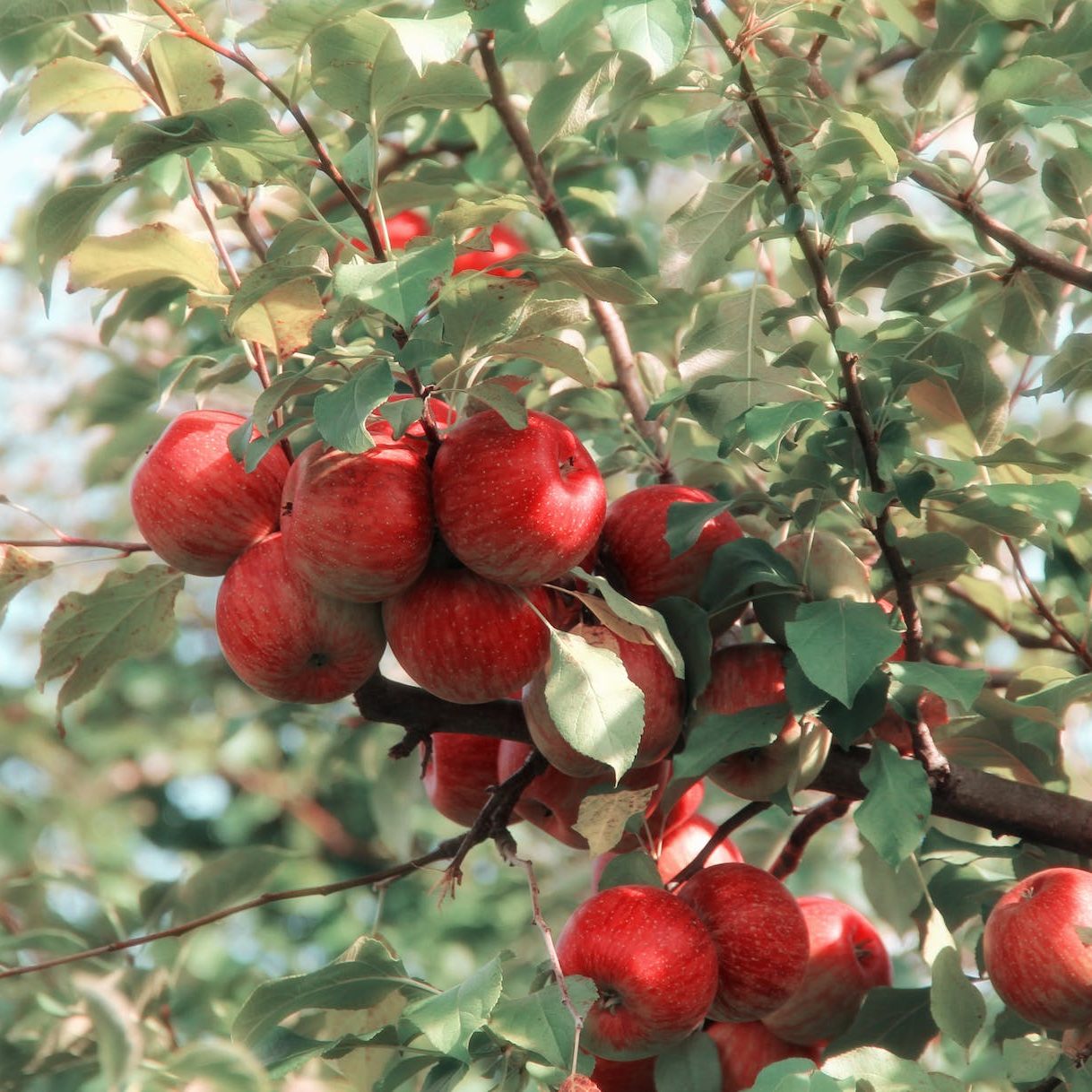
Apple Crumbles, Apple Juice, Apple Sauce, Apple Cider, Apple Pie, Toffee Apples or purely as a healthy, crunchy snack, Apples have a vast range of uses making them perfect for any garden. Apple cultivars can be broadly seperated into three categories based on their usage, being Dessert/Eating Apples, Cooking Apples and Cider Apples. Dessert/Eating Apples represent the most commonly cultivated varieties such as Fuji, Gala and Jonagold, possessing a combination of aroma, flavour and sweetness. Cooking apples are generally larger and tarter, with a firmer flesh that does not break down in cooking, varieties such as Blenheim’s Orange & Gravenstein are examples of cooking apples, although there can be apples such as Jonathan and Granny Smith which are considered both eating and cooking apples. Cider Apples are generally notable for their bitterness which renders them unsuitable for fresh-eating, but together with their high sugar levels makes them suitable for fermenting into apple cider.
Eating apples especially have been bred to display great variation in flavour, size and colour, ranging from the beloved Granny Smith with its bright-green and sweet-tart flesh, to the orange-tinged, Cox’s Orange Pippin with an aromatic flesh scented of Cherry and the newly developed Mangus Summer Suprise with its glossy red skin and a stunning pink hued flesh with a sweet, berry-like flavour. This reflects a tiny portion of the vast diversity in apple cultivars, even for the relatively limited yet extensive range available in Australia. One limitation for apple growers can be that the majority of traditional cider and cooking apples are traditional, high-chill varieties, with the majority of low-chill apples being dessert/eating apples (although they can still be used for cider and cooking).
Growing Requirements
Apple Trees thrive in cool temperate climates such as the mountainous climates of the Great Dividing Range and ‘The Apple Isle’ of Tasmania, climates where apple trees will grow readily from discarded trees along the roads. These locations experience cold winters, receiving ample chill hours and plentiful rainfall to ensure moist soils ideal for Apple Growing. While cool temperate climates are ideal for growing the commercially cultivated, high-chill varieties, there are an increasing range of low-chill cultivars, suitable for the warm temperate and subtropical climates that many Australians live in. Varieties such as Anna, Dorsett Golden, Tropic Sweet and Sundowner are widely available and suitable for low-chill climates.
In addition to the adaptability from different cultivars, Apple Trees also come grafted onto a wide range of rootstocks adapted to various soil conditions and providing various heights. Trees are available variably grafted as Stepovers (~below 1.5m high), Dwarf (~2-3m), Semi-Dwarf (~3-5m) and Medium to Tall trees which will all exceed 5m but are best kept below this, all rootstocks will ensure plants remain smaller than a Seedling tree. Resistance to pests and diseases such as Woolly Aphids and Collar Rot vary significantly as does tolerance to poorer, drier soils. Rootstocks such as the MM.111 (on which plants grow to 75% of their seedling size but can be pruned to size) display resistance to both Woolly Aphids, Collar Rot and poor, dry soils, making them an excellent choice.
Slightly-acid, moisture-retentive but well-draining loam soils represent perfect growing conditions, however, provided drainage is not poor and soils are kept moist during fruiting, Apple trees will generally adapt to their conditions. Trees are hardy once established but will require a full sun position. Fruit flies (both Mediterranean and Queensland) and Codling Moths will often target fruits, requiring ripening fruits to be netted for protection.
Appearance
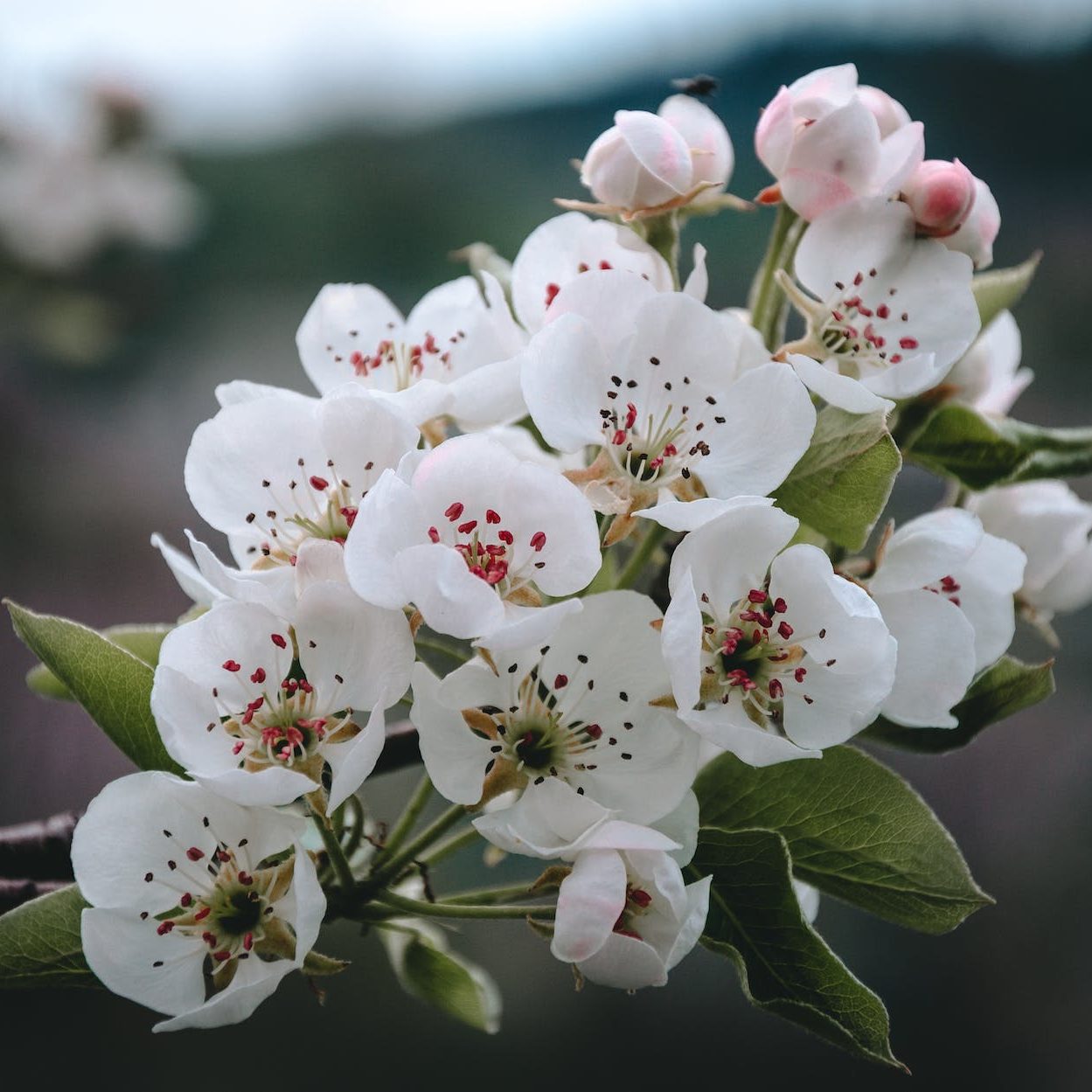
Apple trees possess a rugged beauty, with an attractive, rounded form and irregular branches within. While they may not be as beautiful as many Crab Apple varieties with which they can hybridise, Apple Trees are well-suited to an ornamental position. Although not as beautiful as a Prunus like a Cherry, Plum or Peach, an Apple Tree is beautiful in flower with the white, pink-tinged flowers borne from clusters of flowering spurs.
The unparalleled diversity of Apple Cultivars ensures there is a cultivar suited for every climate, every purpose, every space, every taste and home gardeners can enjoy a range of cultivars far beyond that commercially available.
Plant Profile/Properties
| Latin Name | Malus Domestica |
| Place of Origin | Central Asia |
| Propagation | Grafting |
| Deciduous/Evergreen | Deciduous |
| Pollination (info) | 2 Required |
| Average Max Height | 5m |
| Average Time to Fruiting | 2-4 Years |
| Harvest Period | Refer to Below Table |
| Growth Rate | High |
| Chill Hours (info) | Refer to Below Table |
| Cultivars/Varieties in Australia | Refer to Below Table |
| Dwarfing Varieties | Yes, Rootstock Dependent |
| Preferred Climate(s) (info) | Refer to Table Below |
| Marginal Climate(s) | N/A |
| Cold Tolerance when Mature (info) | High (-30) |
| Rainfall (info) | Low – Medium |
| Pot Suitability | Yes (Dwarf Varieties) |
| Sun/Shade Tolerance | Full Sun |
| Preferred Soil (info) | Good Drainage |
| Preferred PH (info) | Slightly Acid to Neutral (5.5-7.5) |
| Drought Tolerance | Medium |
| Wind Tolerance (info) | Medium |
| Salt Tolerance (info) | Low |
| Pests & Diseases | Scale, Mites, Canker, Rot, Fruit Fly |
 Hortiforum