General Info – Ambarella, Hog Plum, June Plum, Cythere
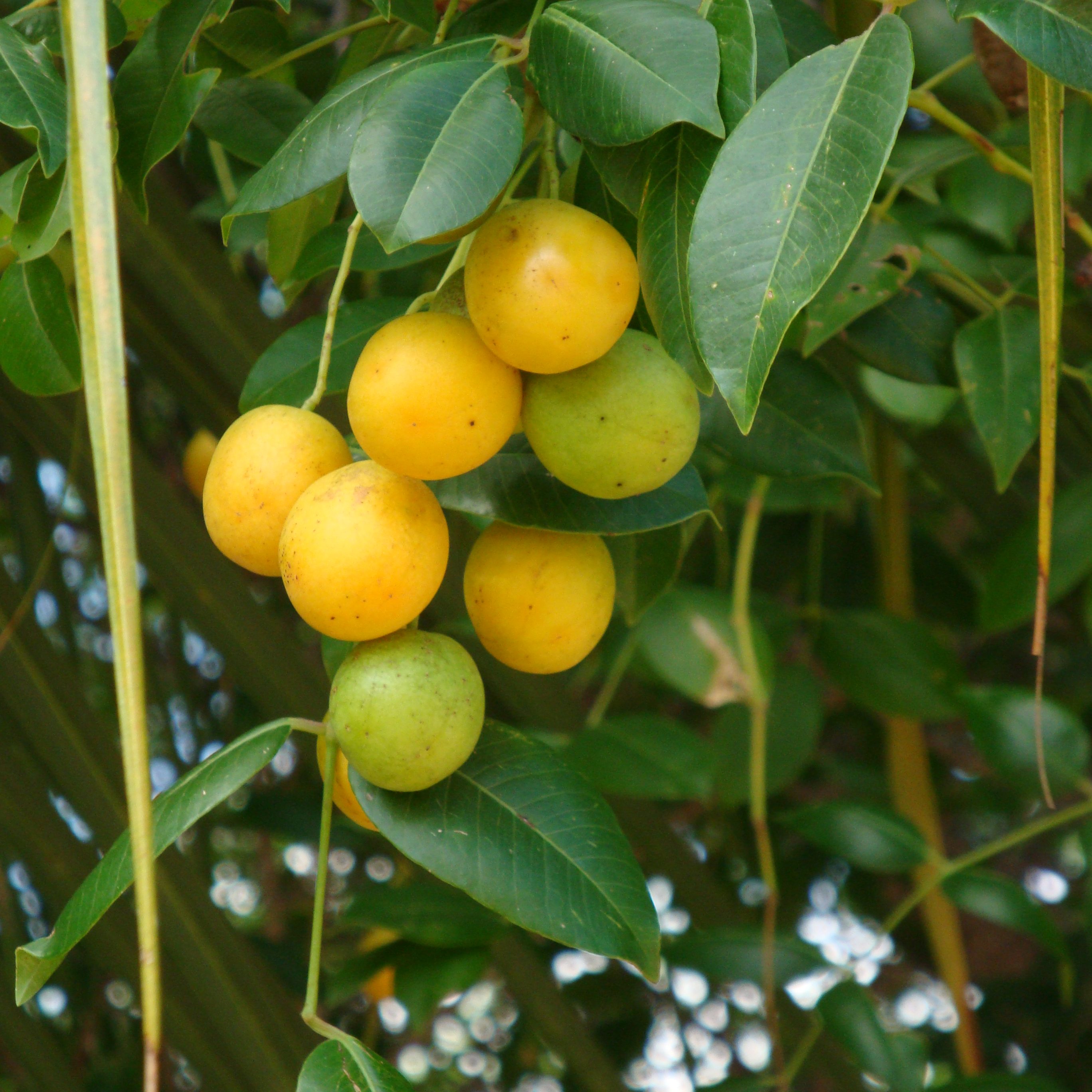
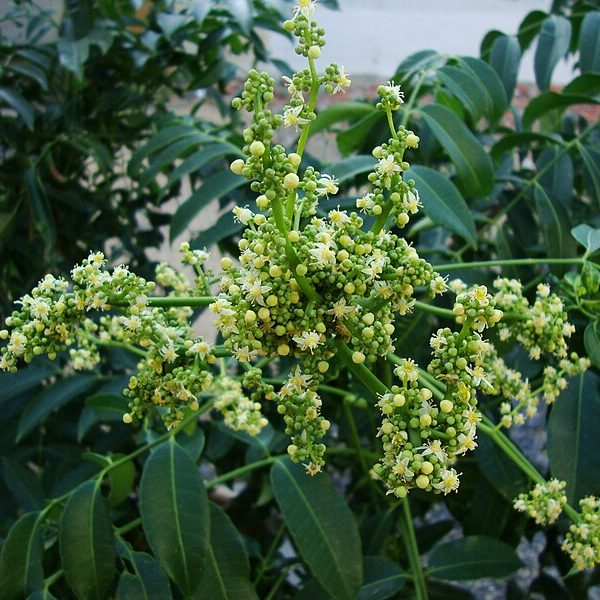
Robust and prolific, bearing delectable fruits in both their green and ripe states, and featuring a widely available dwarf variety, the Ambarella is extensively cultivated across the tropics for evident reasons. Belonging to the Anacardiaceae family and therefore being a relative of the Mango, the Ambarella is commonly consumed in its green state. When eaten green, the fruits are peeled, halved, and coated in a mixture of salt and seasonings. Although somewhat insipid on its own, the fruit provides a satisfying crunch and a mild taste that complements the seasonings. Upon ripening to a golden hue, the flesh softens, unveiling a sweet and sour flavour reminiscent of Pineapple, Starfruit, and Mango, accompanied by a distinct Pineapple fragrance. The Plum-sized fruits, shaped like plums, have noticeable fibres surrounding the core. Ripe fruits can be transformed into jams or marmalades or enjoyed stewed. In subtropical regions, the Ambarella yields fruit from May to August, offering valuable winter produce. Originating from Melanesia and Polynesia, the Ambarella has now spread widely across the tropics, thriving in tropical and subtropical conditions like its relative, the Mango. The plants thrive best in a location sheltered from strong winds and in full sun. While partial shade may be beneficial in early years, it can diminish fruiting once the plant matures. Although brief, light frosts are tolerated, they may lead to leaf drop (if not already occurred) and should be avoided if possible. As long as the soil quality is not notably infertile, poorly drained, or highly alkaline, the Ambarella has minimal soil requirements. The dwarf form is preferable for those with limited space or in cooler climates, allowing for pot cultivation and relocation to a warm, sheltered spot in winter, akin to dwarf mangoes. Being a medium-sized tree with vigorous growth and abundant fruit production, the Ambarella may, at times, overproduce to the detriment of its own health. The long penduncles of the Ambarella yield sizable clusters of up to 20 fruits that ripen to a golden yellow. The glossy pinnate foliage is glabrous, and the inconspicuous small white flowers add to its appeal. In tropical conditions, the Ambarella can grow up to 15-18m tall, exhibiting semi-deciduous tendencies in dry, winter climates, much like its relative, the Red Mombin. Dwarf varieties, staying below a manageable 4m with smaller fruits, are available, boasting quicker fruit-bearing and reportedly longer fruiting seasons. Whether enjoyed as a crisp, crunchy vegetable in its green state or savoured in its ripe, soft, sub-acidic form, the Ambarella requires minimal care and maintenance, providing a bountiful harvest during a largely uneventful fruiting period. Embrace the abundance and plant an Ambarella to fill the gap in your garden.
Please reach out to us (Contact & Socials) if you come across any broken links, incorrect details, or if you represent an online nursery that sells the products mentioned above.

 Hortiforum