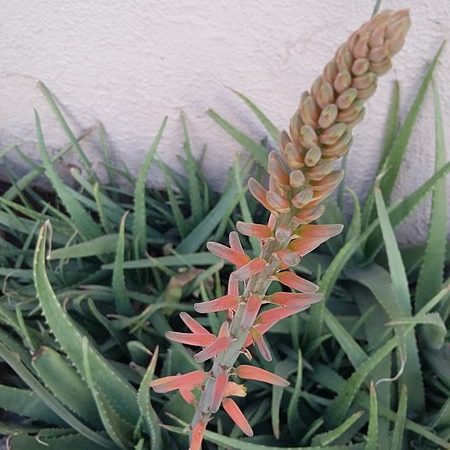
Aloe Vera stands out as an extraordinary and versatile plant, boasting a captivating form and resilience to diverse conditions. Widely recognized and historically cultivated for its medicinal properties and applications, Aloe Vera’s fleshy leaves yield a gel that is commonly employed as a topical remedy. Beyond its medicinal reputation, Aloe Vera has a lesser-known but equally valuable culinary utility. Whether juiced or utilized in its solid gel form, it adds a refreshing and texturally pleasing dimension to beverages and desserts. It is crucial to extract only the gel from the inner upper part of the leaves, as the outer green and bitter base are deemed toxic. Aloe Vera’s succulent characteristics are indicative of its preferred conditions. Despite its widespread cultivation and naturalization in areas like the Canaries and North Africa, Aloe Vera is native to the semi-arid landscape of the Hajar Mountains in the southeast of the Arabian Peninsula, thriving amidst wild Figs and Olives. Reflecting its native climate, Aloe Vera has minimal rainfall requirements and is well-suited for xeriscaping or arid gardens where rainfall is sporadic or scarce. For optimal growth, it is crucial to ensure excellent drainage in the soil, as overwatering may lead to rot. A sandy loam soil provides the perfect balance of drainage and mild fertility, although Aloe Vera tolerates infertile, poor soils. Container cultivation is also well-suited, with a cactus mix ensuring proper drainage. In addition to its low water needs, Aloe Vera exhibits salt and wind tolerance, thriving in harsh, full sun conditions but necessitating protection from more than light frosts. Apart from its practical uses, Aloe Vera is cultivated for its ornamental value, thanks to its hardy nature and attractive foliage. The succulent leaves, vibrant green with white speckles and small white spines along the edges, form an ornamental rosette. In optimal conditions, plants can reach a height of nearly 1m. During summer, a long, protruding raceme emerges from the plant’s center, adorned with many tubular flowers at the exposed top of the stem. With its minimal requirements, hardiness, and diverse applications, Aloe Vera proves to be an ideal addition to any garden.
Please reach out to us (Contact & Socials) if you come across any broken links, incorrect details, or if you represent an online nursery that sells the products mentioned above.


 Hortiforum