General Info – Indian Almond, Sea Almond, Tropical Almond
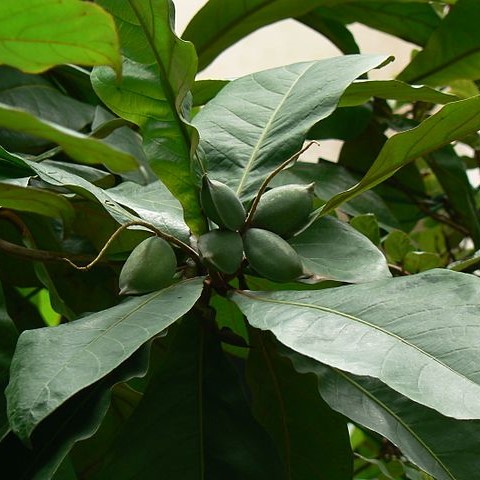
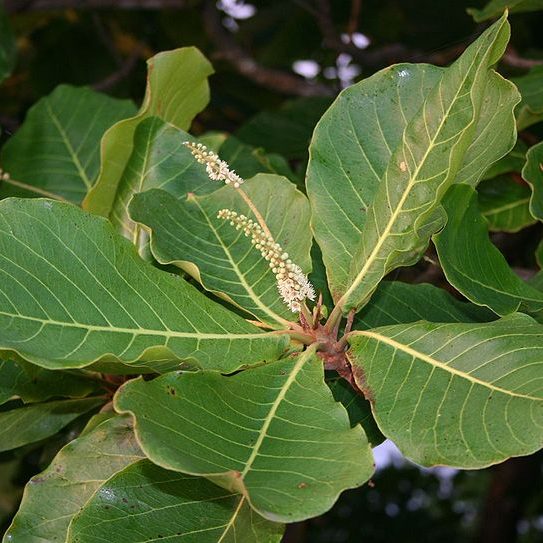
With its almond-like nuts, splendid deciduous foliage, and ability to withstand harsh coastal conditions unsuitable for many other plants, the Indian Almond provides a trouble-free solution for tropical gardeners in exposed coastal locations. Also known as the Indian or Tropical Almond, its fruits closely resemble Sweet Almonds in their flat shape and are classified as botanical drupes. These fruits ripen to a vibrant purple or red and become buoyant, akin to Coconuts, facilitating their spread through ocean currents and resulting in their broad natural distribution. Within these fruits lies a relatively small kernel, somewhat challenging to extract but produced effortlessly in significant quantities. In terms of taste, the nuts are quite similar to sweet almonds, albeit milder, and are consequently seldom commercially cultivated. The uses for these nuts align with those of regular sweet almonds or, more broadly, any nuts, making them ideal for snacking or cooking. The Indian Almond serves as a suitable substitute for sweet almonds in coastal, tropical climates where neither the traditional almond nor other tropical nuts such as Cashew Nuts, Guiana Chestnut, or Macadamias thrive. A relative of the fellow Australian native Kakadu Plum and a member of the Terminalia genus, the Indian Almond is a hardy plant, as are most members of its genus. Notably, these plants are dry season deciduous, providing resilience during dry periods and drought, although medium-high rainfall periods are optimal. They are also adaptable to a range of pH levels and soil structures but require a tropical or subtropical coastal climate. As a beautiful shade tree with rapid growth and resilience to the toughest conditions of wind, salt, drought, and deficient soils, the Indian Almond is commonly planted along beachfronts or coastal paths, where it is also naturally found, earning it the name Beach or Sea Almond. Often planted alongside coconuts, the Indian Almond is suitable for exposed areas subject to the full force of cyclones and tropical storms, strengthened by its buttressed roots. In ideal conditions, the Indian Almond can grow into a large tree over 30m tall, though often it remains shorter with a reasonable spread, making it an ideal shade tree for landscaping. The plants have a distinctive pagoda-like shape due to their layered tiers of horizontal branching. Typical of its genus, Indian Almond leaves are clustered at the terminals, a characteristic that gave the genus its name Terminalia. The slightly leathery and veined leaves exhibit a beautiful deciduous habit occurring twice a year, with colors maturing from copper and gold to a striking red, reminiscent of the autumn hues of temperate plants such as maple, ash, and oak. In spring, fragrant white flowers emerge from terminal growth, attracting wildlife. A captivating deciduous spectacle in the tropics, robust and flourishing in the harshest conditions, and offering tasty, edible nuts, the Indian Almond stands out as an essential choice for the coastal tropics.
Please reach out to us (Contact & Socials) if you come across any broken links, incorrect details, or if you represent an online nursery that sells the products mentioned above.

 Hortiforum