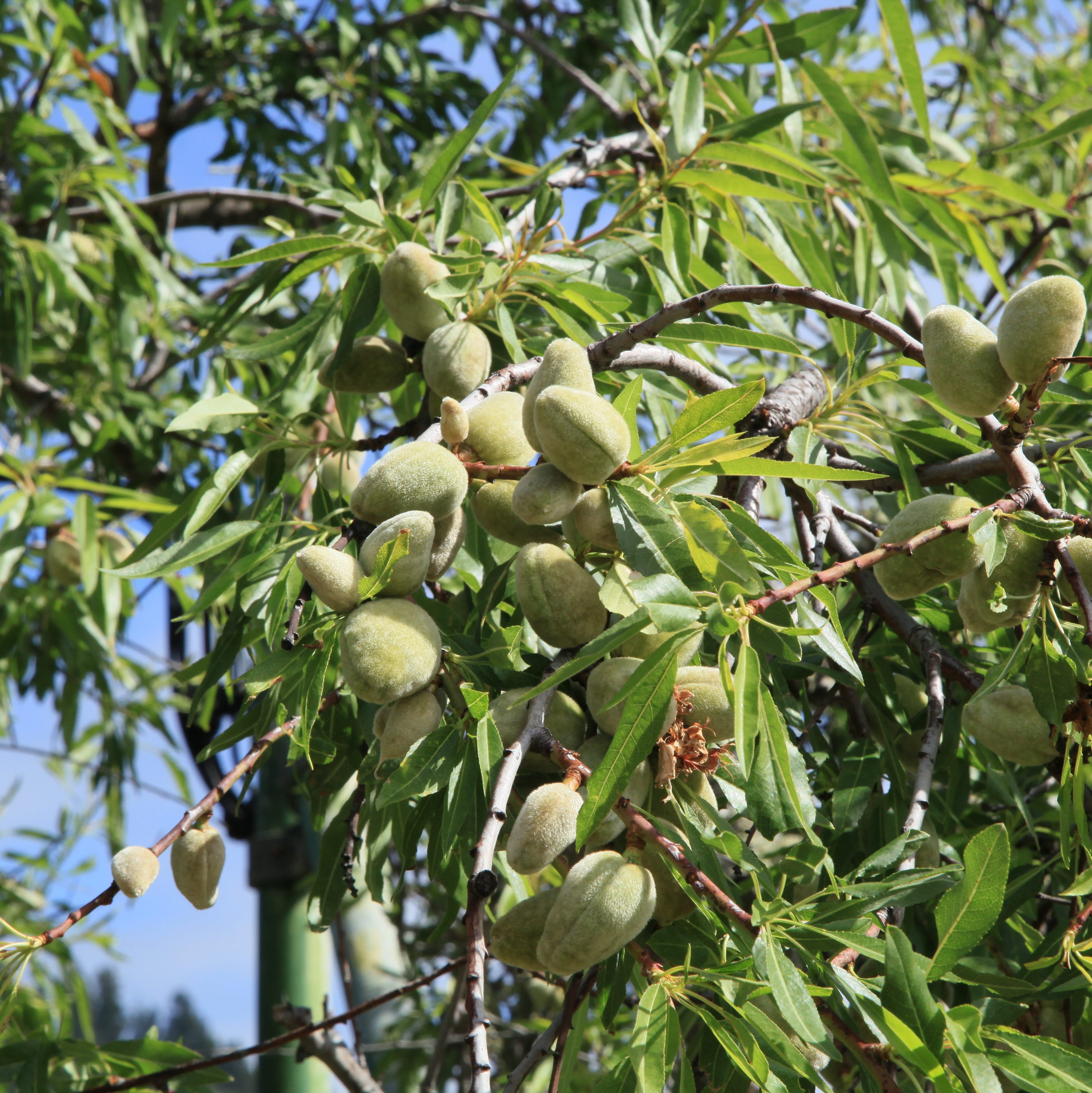
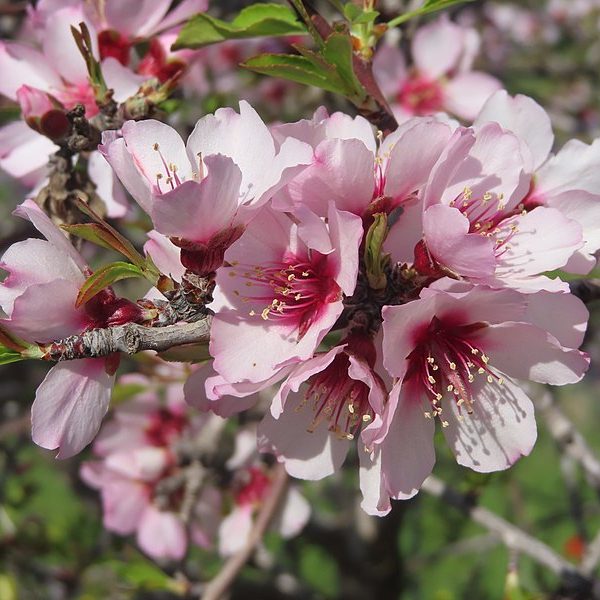
A compact, productive, and ornamental tree bearing delectable, multi-purpose nuts, the Almond stands out as one of the most appealing nut trees for home cultivation. Almond nuts are nestled within round-hairy fruits, resembling thin Peaches, and upon ripening, the husk dries and splits to unveil the kernel within. Widely embraced across Europe, the Middle East, and South Asia, the Almond serves as a dynamic, versatile ingredient, enjoyed either raw or toasted for its sweet, nutty flavour in a variety of sweet and savoury dishes. Almonds can be transformed into diverse products, including flour/meal, pastes, and increasingly popular Almond milk and butter for those with lactose intolerance. Delectable treats such as Marzipan and Italian Biscotti exemplify the culinary delights achievable with home-grown Almonds. Originating from Iran and the Levant, Almonds have been cultivated for their nutritious, flavourful nuts in their native regions and throughout the Mediterranean for an extensive period. Flourishing in Mediterranean climates marked by distinct seasons, including cool, wet winters and hot, low-humidity summers (essential for pollination and pest prevention), Almonds exhibit drought tolerance, yet they thrive as optimal producers with supplemental irrigation during spring and summer. Ideal conditions for cultivation involve fertile loam soils for moisture retention and excellent drainage, coupled with a full sun position for optimal production and health. Traditionally relying on cross-pollination, the availability of self-pollinating varieties, including dwarf options, has grown. These dwarf, soft-shelled, self-pollinating varieties, widely accessible to all gardeners, prove excellent for home cultivation (such as the Dwarf Papershell). Almonds, belong to the Prunus genus alongside Nectarine, Cherry, and Apricot, showcasing a breathtaking, ornamental display in early spring. Bare, leafless trees burst into a profusion of delicate, graceful white-pink flowers, creating a spectacular sight. With a height reaching up to 6m (only 3m for dwarf varieties) and a spreading form, Almond Trees are best pruned into a vase shape, resembling Peaches. Their potentially compact size renders Almonds a stunning but practical addition to temperate climates, outshining other nuts like Hazelnut and Walnut often more hungry for space. Combining iconic, splendid Prunus blooms with a valuable, delightful nut, Almonds emerge as the ideal nut choice for Mediterranean Climates.
All Varieties are Grafted unless noted. Please reach out to us (Contact & Socials) if you come across any broken links, incorrect details, or if you represent an online nursery that sells the products mentioned above.

 Hortiforum